%2010.svg)


Table Of Contents

Compliance automation platforms are utilized across various industries, including SOC 2 reporting and financial services. Their key goal is to reduce repetitive tasks and standardize workflows.
However, for RIAs, the core challenge is not just reducing manual work. It is about maintaining continuous supervisory oversight and creating documentation and evidence that withstands regulatory scrutiny.
Many platforms can automate checklists or help teams track tasks. But most do not provide real‑time visibility into compliance risk, link compliance to portfolio activity and advisor decisions, or create defensible documentation.
As regulatory expectations rise, firms are getting examined more frequently and more thoroughly, which is why stronger, more connected compliance processes are becoming important.
This guide reviews the leading compliance automation platforms in 2026. It highlights what RIAs should look for: tools that help firms improve supervision, strengthen defensibility, and support ongoing readiness for regulatory review.
What Compliance Automation Platforms Solve
Compliance teams are expected to manage growing complexity without slowing down the business. As firms scale, manual processes and fragmented workflows make it challenging to maintain consistency and oversight.
Compliance automation platforms help address these operational gaps. They bring structure, visibility, and consistency to core compliance workflows.
Here are the key issues that compliance automation aims to solve.
Manual Documentation and Audit Preparation
Manual documentation takes time and increases the risk of gaps during audits. Automation helps standardize records and ensures documentation is easier to maintain and retrieve.
Lack of Visibility Across Workflows
Compliance activity is spread across systems and teams. Compliance platforms centralize tracking and help teams see what is complete, what is pending, and where risks may exist.
Scaling Compliance without Increasing Headcount
As firms grow, compliance demands increase. Automation helps teams handle higher volumes of work without relying on additional resources.
Managing Multiple Frameworks
Firms need to meet SEC, SOC 2, and ISO requirements. Platforms help organize and track these obligations within a single system.
Compliance Automation Platforms for RIAs
For RIAs, compliance does not operate in isolation. It is directly tied to portfolio activity, client context, and the decisions advisors make every day. This changes what firms should expect from a compliance automation platform. It is not just about tracking tasks. It is about supporting how recommendations are monitored, reviewed, and defended.
Here’s what they should deliver.
Connecting Compliance to Portfolio Activity
Compliance should reflect what is happening in client portfolios. Platforms need to link oversight directly to investment activity, not just policies and checklists.
For example, if a client portfolio drifts beyond its intended allocation, that change should not sit in isolation. It should be visible alongside whether the advisor rebalanced or made a conscious decision to wait.
Improving Supervisory Visibility
Supervision requires clear, ongoing visibility into advisor actions. Firms need to see how decisions are made, not just whether tasks are completed.
In many firms, this still means pulling data from multiple systems to understand a single recommendation. That gap is where oversight breaks down.
Strengthening Documentation Quality
Documentation should capture context, rationale, and outcomes. This improves clarity and ensures records hold up during reviews and audits.
A note that simply confirms an action was taken rarely answers the real question. What matters is why the decision was made and how it connects to the client’s situation then.
Supporting Exam Readiness
Regulatory reviews require more than completed tasks. Firms need structured, time-stamped records that demonstrate consistent oversight.
For instance, when examiners ask how a decision was reviewed, the answer should not depend on recreating history. The record should already reflect the sequence of actions and reviews as they happened.
Enabling Defensible Recommendations
Advisors must be able to explain and support their decisions. Platforms should help connect client profiles, portfolios, and recommendations in a way that stands up to scrutiny.
This becomes critical when a recommendation is questioned. Without a clear link between client inputs, portfolio context, and the decision itself, even well-intentioned advice can be difficult to defend.
7 Best Compliance Automation Platforms
1. StratiFi
StratiFi is built around how compliance actually works inside advisory firms, where oversight, portfolio activity, and advisor decisions are continuously connected.
What It Does
StratiFi provides continuous, automated compliance monitoring tied directly to portfolio activity. It monitors every account for risks such as concentration, suitability, and allocation drift, without relying on sampling or manual reviews.
The platform connects advisory decisions with risk alignment and supervisory workflows, ensuring that compliance is not tracked separately but embedded into daily operations. Moreover, it links Reg BI, suitability, and portfolio behavior within a unified system.
This allows compliance teams to see what changed, why it changed, and how it was handled across accounts and advisors.
Why It Stands Out
StratiFi goes beyond workflow automation and enables account-level supervision. It supports continuous oversight with exception-driven monitoring and built-in documentation rather than periodic reviews.
Best For
- RIAs and broker-dealers managing growing account volume
- Firms that need continuous, account-level supervision
- Compliance teams focused on defensible documentation and Reg BI readiness
- Advisory firms looking to connect compliance directly to portfolio activity
- Chief compliance officers looking to turn regulatory overhead into a competitive edge
2. Comply
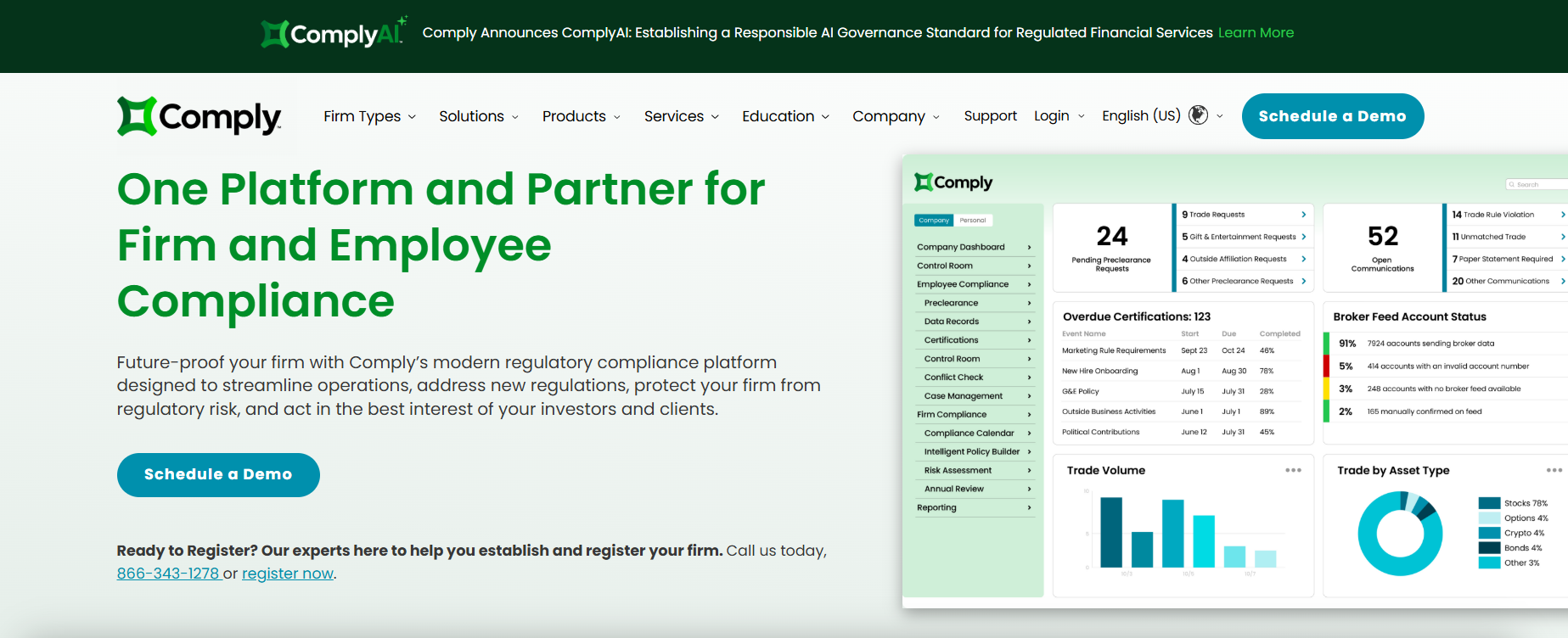
Comply focuses on structuring and standardizing compliance workflows for RIAs and broker-dealers.
What It Does
It provides tools for managing regulatory calendars, filings, and documentation processes. The platform helps firms organize compliance obligations, track deadlines, and maintain consistency across policies and procedures.
This becomes especially relevant for firms managing recurring filings and audits, where missing timelines or inconsistent documentation can create operational risk. Comply helps teams stay aligned and reduce reliance on manual tracking by centralizing these workflows.
Why It Stands Out
Comply brings structure to compliance programs, especially around documentation and regulatory timelines. It is designed to reduce gaps in process execution rather than monitor real-time activity.
Best For
- Firms managing regulatory filings and exam workflows
- Teams standardizing compliance processes across advisors
- RIAs focused on documentation consistency
3. MyComplianceOffice (MCO)
MyComplianceOffice offers a broad compliance platform covering multiple regulatory requirements across financial firms.
What It Does
It supports areas, such as employee compliance, trade monitoring, and regulatory reporting, within a single system. This helps firms manage various compliance functions together.
Furthermore, it helps with tracking employee disclosures, monitoring personal trading activity, and managing conflicts of interest across the organization. It allows firms to maintain audit trails and generate reports required for regulatory review.
Why It Stands Out
MCO provides wide coverage across compliance use cases, making it suitable for firms that need a centralized system for multiple regulatory functions.
Best For
- Larger firms with multiple compliance requirements
- Teams managing employee, trade, and reporting compliance
- Organizations needing a unified compliance framework
4. Smarsh
Smarsh focuses on communications compliance and recordkeeping across digital channels.
What It Does
It captures, archives, and supervises communications across email, messaging, and social platforms to meet regulatory requirements.
Teams can retain records in line with regulatory standards, enabling them to search, review, and monitor communications for potential risks. Furthermore, it supports supervision workflows, where flagged messages can be reviewed and escalated as needed.
Why It Stands Out
Smarsh is widely used for communication surveillance, offering strong capabilities in managing large volumes of digital records.
Best For
- Firms with high communication volumes
- Teams focused on archiving and supervision of messages
- Compliance teams managing digital recordkeeping
5. Global Relay
Global Relay provides cloud-based compliance solutions for communication archiving and supervision.
What It Does
It enables firms to capture, store, and review communications while supporting audit and regulatory requirements.
This includes archiving data across email, messaging, and collaboration platforms, with tools to search, retrieve, and supervise communications as part of ongoing compliance workflows. It also helps firms enforce retention policies and maintain records in a format that is accessible during audits and regulatory reviews.
Why It Stands Out
The platform emphasizes secure data storage and scalable infrastructure for communication compliance.
Best For
- Firms prioritizing secure communication archiving
- Organizations with strict data retention requirements
- Teams managing large-scale communication oversight
6. Red Oak
Red Oak focuses on compliance workflows for advertising and marketing review.
What It Does
It helps firms review, approve, and track marketing materials to ensure they meet regulatory standards.
Teams can manage submission workflows, route content for review, and maintain records of approvals and revisions. It also supports version control, helping teams track changes and ensure that only approved materials are used in client communications.
Why It Stands Out
Red Oak streamlines marketing compliance by structuring review and approval workflows.
Best For
- Firms managing marketing and advertising compliance
- Teams reviewing client-facing content
- Organizations needing structured approval workflows
7. ACA ComplianceAlpha
ACA ComplianceAlpha combines compliance technology with advisory support for financial firms.
What It Does
It provides tools for risk assessments, compliance program management, and regulatory reporting.
The platform also supports ongoing program management by organizing policies, controls, and internal processes within a single system. This way, ACA ComplianceAlpha helps firms maintain a more structured approach to compliance while supporting both internal oversight and external reporting requirements.
Why It Stands Out
The platform is backed by ACA’s consulting expertise, combining software with external compliance guidance.
Best For
- Firms seeking both technology and advisory support
- Compliance teams that need risk assessment tools
- Organizations looking for external compliance expertise
What to Look for in a Compliance Automation Platform
Compliance automation platforms play a vital role in helping firms bring structure and consistency to their workflows. As regulatory expectations grow, the focus is shifting toward platforms that not only organize tasks but also strengthen how compliance is monitored and supervised.
For RIAs, this means looking beyond basic automation and focusing on capabilities that support real-time visibility, clear documentation, and defensible decision-making.
Here’s what RIAs should look for in a compliance automation platform.
Continuous Monitoring, Not Periodic Testing
Periodic reviews create gaps between what is happening and what is being checked. Firms need continuous monitoring that surfaces issues as they occur, not after the fact.
Account-Level Visibility Across Portfolios
Supervision should not rely on sampling. Firms need visibility into individual accounts. This enables teams to understand risks, exceptions, and advisor actions in full context.
Time-Stamped, Defensible Documentation
Documentation should reflect when decisions were made and what information was available at that time. This creates a clear record that holds up during audits and client reviews.
Linkage Between Client Profiles, Portfolios, and Recommendations
Compliance cannot sit separately from advisory activity. Firms need to connect client inputs, portfolio behavior, and recommendations to show how decisions align with client needs.
Scalable Supervision Across Advisors
As firms grow, supervision becomes harder to maintain consistently. Hence, the platform should support oversight across advisors without increasing manual effort or creating blind spots.
Summing Up
Compliance automation has helped firms bring structure and consistency to their workflows. The next step is connecting that automation to how advisory decisions are actually made and supervised.
Successful RIAs are moving toward a model where compliance is continuous, visible, and tied directly to portfolio activity and client context. This shift allows firms to strengthen oversight, improve documentation, and reduce uncertainty during reviews.
The goal is not just faster compliance administration. It is building supervision that is consistent, clear, and defensible across every account and every decision.
See how firms are moving beyond task-based compliance toward continuous oversight. Book a demo with StratiFi and learn how linking workflows to decisions improves clarity and control.
FAQs
What Is a Compliance Automation Platform?
A compliance automation platform helps firms manage regulatory tasks, documentation, and workflows in a structured way. It brings consistency and visibility to compliance processes across teams.
How Does Compliance Automation Work?
The platform automates tasks, such as tracking requirements, maintaining records, and monitoring activities. This reduces manual effort and helps ensure compliance processes are followed consistently.
What Are the Benefits of Compliance Automation Platforms?
Compliance automation platforms help reduce operational burden, improve documentation, and bring greater visibility into compliance workflows. This allows teams to manage growing requirements more efficiently.
What Features Should a Compliance Automation Platform Include?
Key capabilities of the best compliance automation platform include workflow tracking, centralized documentation, monitoring tools, and audit-ready reporting. These features help maintain consistency and support regulatory reviews.
What Is a SOC 2 Compliance Automation Platform?
A SOC 2 compliance automation platform helps organizations manage controls and documentation required for SOC 2 audits. It ensures processes are tracked and evidence is maintained for review.
How Do RIAs Use Compliance Automation Platforms?
RIAs use compliance automation platforms to manage regulatory workflows, maintain documentation, and support supervisory oversight. This helps improve consistency and readiness for audits and reviews.