%2010.svg)


Table Of Contents
.png)
The nature of SEC examinations has changed significantly over the past decade. Reviews are broader, more data-driven, and increasingly focused on how advisory firms supervise investment decisions across accounts, advisors, and time.
Regulators no longer look only for policies or procedural checklists. They reconstruct how recommendations were made, how portfolios evolved, and how firms monitored suitability and risk after advice was delivered.
Many RIAs and broker-dealers already use multiple compliance and surveillance tools. Yet exam deficiencies occur; not because firms lack technology, but because compliance evidence is often fragmented across systems. Portfolio activity, client documentation, supervisory reviews, and marketing approvals frequently live in separate platforms, making it challenging to demonstrate a consistent narrative during an examination.
As a result, evaluating SEC compliance solutions requires more than comparing features. Firms must assess whether their systems support continuous supervision, defensible documentation, and firm-wide visibility into advisory activity.
This guide is more than a feature checklist. It examines:
- How regulators evaluate compliance readiness
- The operational capabilities modern solutions must support
- The leading platforms RIAs and broker-dealers are using to strengthen oversight in 2026.
Let’s get started.
How the SEC Evaluates Compliance Readiness
During SEC examinations, examiners focus on how advisory decisions were made and supervised over time. Their objective is to determine whether a firm exercised reasonable supervision and whether recommendations aligned with client objectives, risk tolerance, and regulatory obligations at the moment they were made.
In practice, this means examiners often work backward. They review client accounts, portfolio activity, marketing materials, and client communications to reconstruct the reasoning behind recommendations.
From there, they examine whether supervisory processes identified risks, documented decisions, and maintained consistent oversight across advisors and accounts.
A key distinction regulators emphasize is the difference between policies and proof. Firms may maintain detailed compliance manuals, but examiners look for operational evidence that those policies are applied consistently.
For instance, time-stamped supervisory records, documented suitability analysis, and the ability to trace how portfolio decisions evolved alongside client objectives.
Hence, the concept of “reasonable supervision” extends beyond periodic reviews or sampling methods. Regulators increasingly expect firms to maintain continuous visibility into portfolio risk, client alignment, and advisor activity. Supervisory processes should detect patterns across accounts and advisors, not simply review isolated cases after issues arise.
For compliance technology, this creates a clear standard. Tools must help firms maintain traceability, consistency, and defensibility across advisory activity.
Systems that isolate documentation, portfolio monitoring, and supervisory workflows often struggle to provide this unified view. Hence, many firms are reevaluating how their compliance infrastructure is structured.
5 Compliance Tasks a SEC Compliance Solution Must Perform
For many firms, compliance tools were historically selected to solve narrow operational problems like archiving communications, tracking attestations, or managing policy documentation. While these functions remain important, modern regulatory expectations require compliance systems to support broader supervisory workflows across portfolios, advisors, and client relationships.
An effective SEC compliance solution must perform these 5 core tasks that allow firms to demonstrate how investment decisions are monitored and documented over time.
1. Capture the Rationale behind Investment Recommendations
Supervisory records must show more than evidence that a review occurred. Firms need documentation explaining why a recommendation was appropriate for a specific client at the time it was made.
This includes linking portfolio allocations, client objectives, and risk tolerance to the advisory decision.
2. Offer Account-Level Risk Visibility
Sampling-based reviews can miss emerging issues across portfolios.
Modern compliance solutions increasingly focus on account-level monitoring, allowing firms to identify concentration risks, drift, and suitability concerns as portfolios evolve.
3. Maintain Time-Stamped Supervisory Records
Examiners often ask firms to demonstrate when reviews occurred and how supervisory decisions were documented.
Compliance platforms must create clear audit trails showing when portfolio changes were evaluated, when alerts surfaced, and how issues were resolved.
4. Detect Patterns across Advisors
Supervision is rarely about a single account. Regulators frequently analyze trends across advisors, products, or client groups.
Effective systems help compliance teams identify patterns like repeated portfolio concentration or similar recommendations across multiple clients.
5. Produce Exam-Ready Narratives without Manual Reconstruction
During examinations, firms often need to reconstruct the reasoning behind investment decisions.
Strong compliance platforms allow teams to generate a clear narrative of advisory activity, like linking portfolio actions, client profiles, and supervisory reviews without relying on manual documentation.
These capabilities move compliance from an isolated documentation toward continuous supervisory oversight, thereby enabling firms to demonstrate how advice, risk monitoring, and supervision remain aligned.
7 Best SEC Compliance Solutions for RIAs and Broker-Dealers in 2026
The market for SEC compliance consulting solutions has expanded significantly, with platforms addressing different aspects of regulatory oversight. Modern platforms touch everything from portfolio supervision and recordkeeping to marketing approvals and workflows.
For RIAs and broker-dealers evaluating various solutions, it is important to understand each platform’s strengths and shortcomings.
In this section, we have shared details on various SEC compliance solutions grouped by the specific supervisory or operational problems they address.
For Continuous, Account-Level SEC Supervision
StratiFi
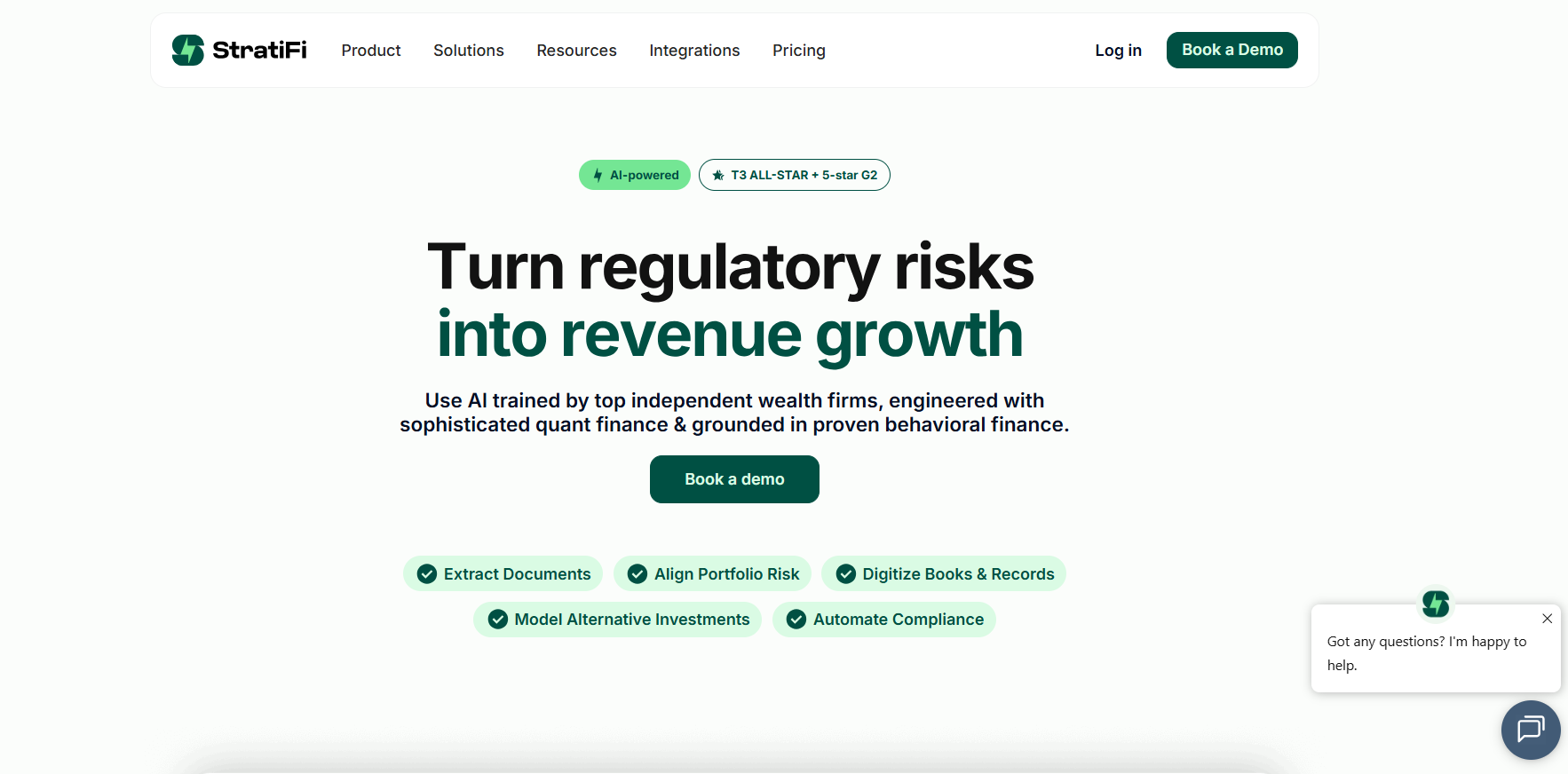
StratiFi is designed to provide continuous, portfolio-aware supervision across advisory activity. Rather than focusing only on documentation or workflow tracking, the platform connects portfolio data, risk monitoring, and supervisory oversight within a unified system.
Key capabilities
- Continuous monitoring of portfolio activity through automated surveillance
- Detection of portfolio drift, concentration risk, and suitability concerns across accounts
- Time-stamped supervisory records that link investment activity to compliance oversight
- Integrated dashboards that provide leadership and compliance teams with firm-wide visibility
This structure allows firms to monitor portfolios continuously instead of relying on periodic sampling. By aligning portfolio intelligence with compliance workflows, StratiFi supports regulatory frameworks such as Reg BI, suitability oversight, and ERISA fiduciary duties.
Best fit
Mid-sized to large RIAs and broker-dealers seeking portfolio-aware supervision across multiple advisors and client accounts.
For SEC Rule 17a-4 Defensible Recordkeeping and Archiving
Smarsh
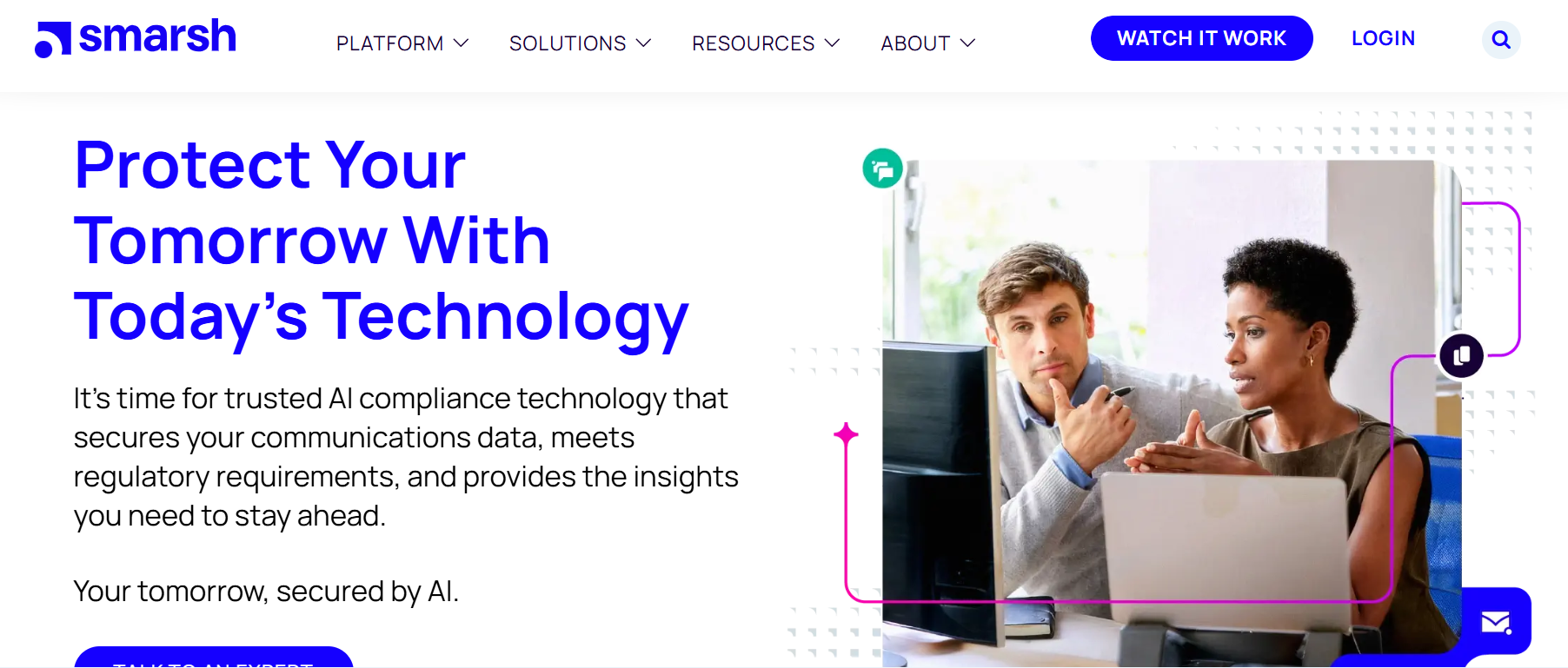
Smarsh is widely used for electronic communications archiving and supervision, particularly for firms that must comply with SEC Rule 17a-4 recordkeeping requirements. The platform captures communications across email, messaging platforms, and collaboration tools, storing records in formats designed to meet regulatory retention standards.
Key capabilities
- Archiving across email, messaging apps, and collaboration platforms
- Supervisory review workflows for communications monitoring
- WORM-compliant record storage supporting SEC retention requirements
- Search and retrieval tools for regulatory requests
Smarsh is commonly deployed as the communications recordkeeping layer within larger compliance technology environments.
Global Relay
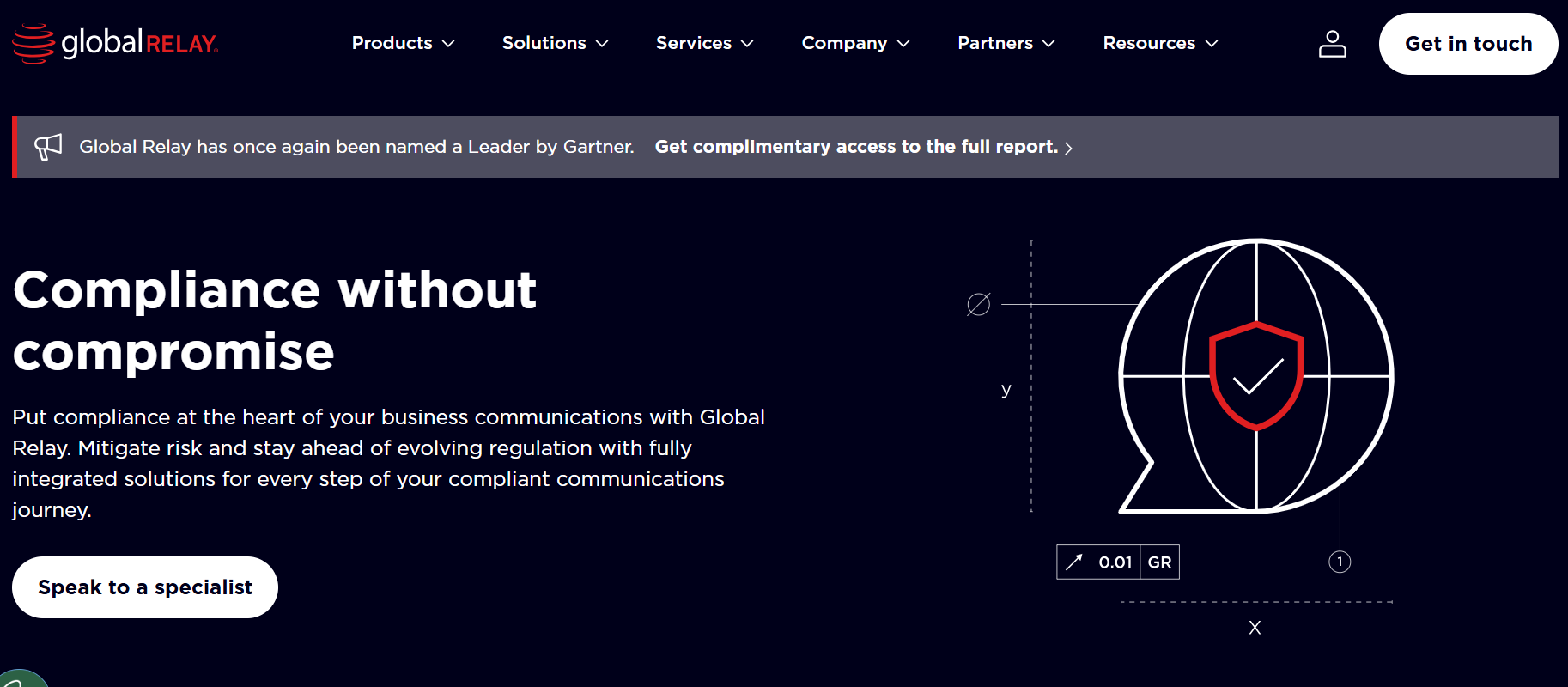
Global Relay also specializes in secure communications, archiving, and supervision for financial institutions. The platform focuses on capturing, storing, and monitoring electronic communications to meet regulatory recordkeeping obligations.
Key capabilities
- Archiving for email, voice, messaging, and social media communications
- Built-in supervisory review and escalation workflows
- Regulatory retention support aligned with SEC and FINRA requirements
- Secure data storage and audit retrieval functionality
Firms often deploy Global Relay to maintain defensible records of client communications, particularly where digital messaging channels are widely used.
For SEC Marketing Rule Approvals and Disclosure Workflows
Comply (ComplySci)
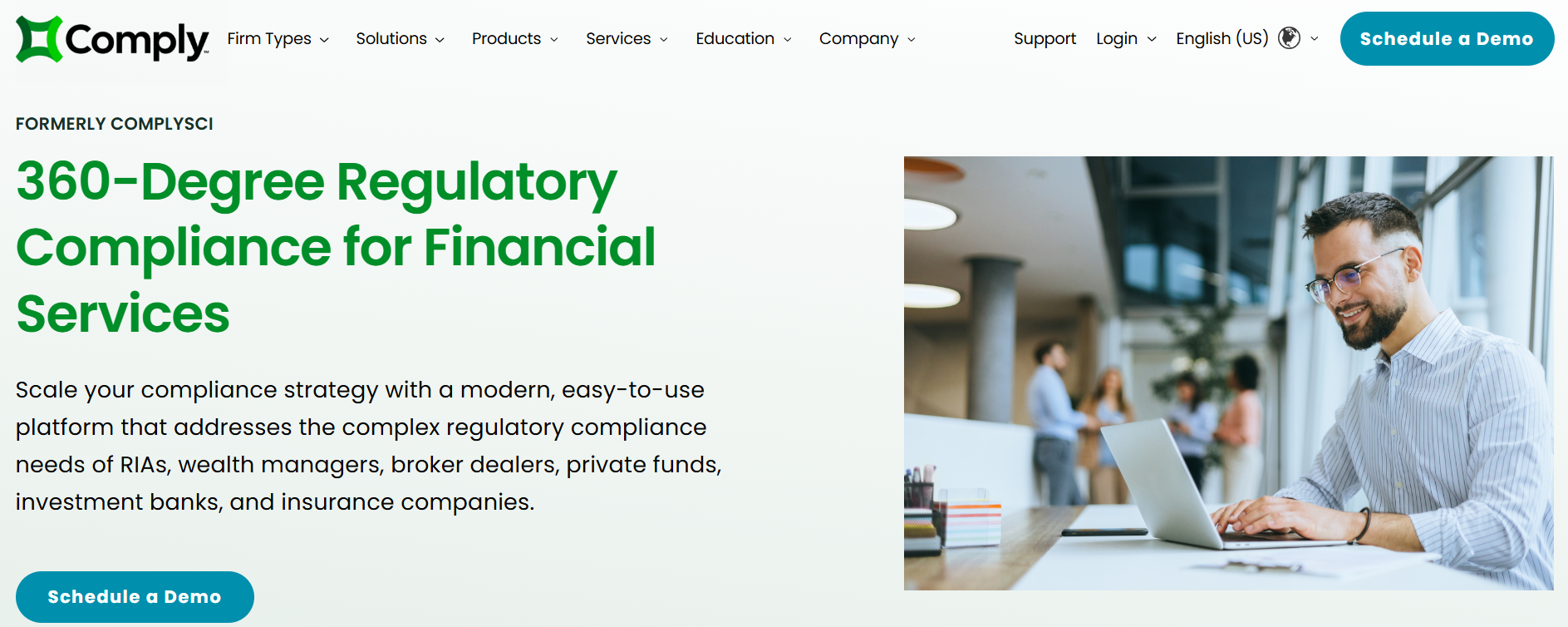
The Comply platform, including ComplySci solutions, provides tools for managing marketing approvals, personal trading compliance, and regulatory disclosures. It helps firms track and document compliance workflows related to marketing communications and employee trading activity.
Key capabilities
- Marketing material review and approval workflows
- Personal trading surveillance and policy enforcement
- Regulatory disclosure tracking and documentation
- Workflow management for compliance reviews
These capabilities support oversight related to the SEC Marketing Rule and employee compliance obligations.
Red Oak Compliance Solutions
Red Oak focuses on advertising and marketing review processes, helping advisory firms manage the approval of marketing materials, client communications, and promotional content.
Key capabilities
- Centralized review workflows for marketing materials
- Automated approval processes for advisor communications
- Version control and documentation for regulatory records
- Integration with communication platforms used by advisors and compliance consultants
Red Oak helps firms maintain a documented approval process for marketing content that may be subject to regulatory review.
For Policy Management, Testing, and Compliance Workflows
ACA Group (ComplianceAlpha / GRC Solutions)
ACA Group offers a range of compliance and SEC compliance services, including tools that support policy management, regulatory testing, and compliance program oversight.
Key capabilities
- Compliance program management and policy tracking
- Regulatory testing and risk assessments
- Governance and internal control workflows
- Integration with ACA’s consulting and regulatory advisory services
These SEC compliance services are often used by firms seeking structured oversight of their compliance programs and internal controls.
MyComplianceOffice (MCO)
MyComplianceOffice provides an integrated platform for conducting risk management and regulatory compliance oversight. The system supports monitoring across employee activity, regulatory obligations, and internal policies.
Key capabilities
- Compliance workflow management
- Employee conduct monitoring
- Policy management and certification tracking
- Regulatory reporting and audit preparation tools
MCO is frequently deployed by firms that require centralized oversight of compliance processes across multiple teams and jurisdictions.
The above-mentioned platforms address different aspects of the regulatory landscape. For RIAs and broker-dealers, the key question is whether the solution allows the firm to maintain consistent supervision across portfolios, advisors, and client activity.
A Guide to Evaluating SEC Compliance Solutions
Oftentimes, even firms with well-established compliance programs discover gaps during SEC examinations. In many cases, the central issue is the way compliance systems are structured.
Tools may manage individual tasks effectively. For instance, archiving communications, tracking approvals, or storing policies. However, they struggle to provide a unified view of advisory activity across portfolios and advisors.
Why Many Firms Still Struggle Even with “Good” Tools
Compliance challenges often arise when critical information is distributed across multiple systems. Portfolio data, marketing approvals, supervisory notes, and communications records may all exist in different platforms, making it difficult to demonstrate how oversight occurred in practice.
Common issues include:
- Documentation that reflects reviews but not the reasoning behind recommendations
- Portfolio monitoring that relies on sampling instead of continuous oversight
- Compliance workflows that operate separately from portfolio and client data
- Supervisory narratives that must be reconstructed manually during exams
When compliance infrastructure is fragmented in this way, firms may find it difficult to demonstrate consistent supervisory oversight, even if individual tools perform their intended functions well.
Core Capabilities to Assess in SEC Compliance Software
When evaluating SEC compliance services, firms should focus on the following capabilities:
Account-level monitoring across portfolios
Systems should detect emerging risks such as drift, concentration, or suitability concerns without relying on sampling.
Direct linkage between Reg BI, suitability, and supervisory review
Compliance records should connect client profiles, investment recommendations, and supervisory oversight.
Time-stamped, defensible audit trails
Documentation should show when reviews occurred and how issues were resolved, including marketing approvals and client communications.
Examiner-ready reporting
Platforms should enable firms to produce clear narratives of advisory activity without manually assembling records from multiple systems.
Minimal disruption to advisor workflows
Effective compliance systems integrate with advisory activity rather than adding administrative burden for advisors and compliance consultants.
Evaluating compliance platforms through this lens helps firms determine whether their technology supports not just documentation, but consistent supervisory oversight across the organization.
Unified SEC Compliance Solutions Are Becoming the Default
As SEC examinations grow broader and more data-driven, many RIAs and broker-dealers are moving toward unified SEC compliance services that connect portfolio oversight, documentation, and supervisory workflows.
The shift reflects a practical reality: periodic reviews and fragmented tools make it difficult to demonstrate consistent supervision across advisors and accounts.
Modern compliance platforms increasingly support continuous monitoring, defensible documentation, and firm-wide visibility, allowing firms to maintain oversight as they scale. Rather than assembling evidence during an exam, compliance becomes an ongoing process aligned with advisory activity.
Curious how firms are strengthening supervision while reducing operational burden?
Book a demo to see how StratiFi’s intuitive platform allows you to:
- Guarantee portfolio fit with risk alignment and client check-ins
- Convert statements into insights and winning proposals
- Research investment models and create fact sheets
- Convert proposals into e-signed investment policy statements
- Monitor mutual fund share-class violations
- Comply with SEC Regulation Best Interest (Reg BI)
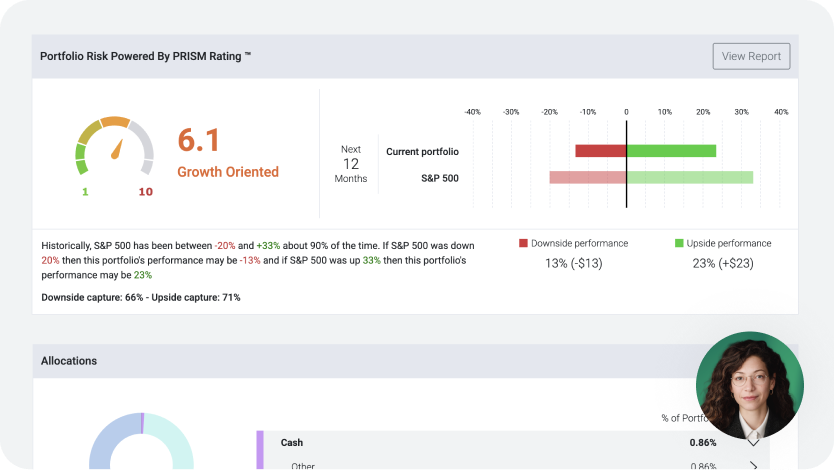
Explore how advisory firms maintain defensible supervision across portfolios and advisors.
FAQs
What Are SEC Compliance Solutions for RIAs and Broker-Dealers?
SEC compliance consulting solutions are software platforms that help advisory firms monitor portfolios, supervise advisor activity, maintain regulatory records, and document oversight. These systems support requirements related to Reg BI, suitability, marketing rules, and supervisory obligations.
Why Do RIAs Need Specialized SEC Compliance Solutions?
RIAs must demonstrate that investment recommendations align with client objectives and regulatory requirements. SEC compliance software help firms maintain supervisory records, monitor portfolio activity, and produce documentation that regulators expect during examinations.
How Do SEC Examiners Evaluate Compliance During an Audit?
Examiners typically reconstruct investment decisions by reviewing portfolios, client records, marketing materials, and supervisory documentation. They assess whether firms maintained reasonable supervision and whether recommendations aligned with client profiles and risk tolerance.
What Features Should RIAs Look for in SEC Compliance Software?
Key capabilities include account-level portfolio monitoring, time-stamped supervisory records, linkage between client profiles and recommendations, automated detection of risk patterns, and reporting tools that help firms produce clear compliance narratives during examinations.
How Are Modern SEC Compliance Consulting Solutions Evolving?
Modern platforms increasingly combine portfolio monitoring, supervisory workflows, and compliance documentation within unified systems. This allows firms to maintain continuous oversight rather than relying on periodic reviews or manual documentation processes.