%2010.svg)


Table Of Contents
.png)
Managing a modern wealth management firm is no longer just about advising clients.
Advisors today must balance complex portfolios, regulatory compliance, risk oversight, client communication, and reporting. They also need to ensure that each decision is defensible and aligned with the firm’s overall intelligence.
To do this effectively, wealth managers rely on multiple software platforms for portfolio management, compliance, risk assessment, proposals, CRM, and reporting.
Each tool solves a specific problem. However, when integrated, it can create fragmentation and duplicated work.
For instance, a compliance platform might flag a risk. However, if that insight does not flow into the advisor’s CRM or portfolio dashboard, it can be missed during client reviews.
Hence, the challenge is not finding tools. The real challenge is finding tools that work together, where intelligence flows across workflows and strengthens decisions.
This guide highlights the top software for wealth managers, organized by their strengths. It also provides a practical framework to help your firm select the right combination of tools that reduces operational risk, improves oversight, and supports defensible decision-making.
TL;DR
- No single wealth management platform does everything a modern advisory firm needs.
- The right software stack depends on firm size, compliance exposure, and growth goals.
- The biggest risk is choosing tools that do not integrate intelligence across workflows.
- AI is standard. The differentiator is whether it strengthens decisions and defensibility or just dashboards.
What Software Do Wealth Managers Actually Use?
Every day, wealth managers juggle multiple responsibilities. They review client portfolios, assess risk, ensure compliance, update proposals, track client interactions, and generate reports.
Most of this work relies on a collection of software platforms, including portfolio management systems, compliance tools, risk engines, proposal generators, CRMs, and reporting dashboards.
Here, most firms struggle because these tools do not integrate. Data remains fragmented, and workflows are disconnected.
As stated, the key issue is not the availability of tools. Lack of integration and shared intelligence creates challenges.
Here’s a closer look at the main categories of software wealth managers rely on and how each plays a role in the firm’s operations:
- Portfolio Management and Reporting: These platforms track client holdings, performance, and analytics, providing actionable insights that support investment decisions. If disconnected from other systems, portfolio insights rarely inform compliance checks, proposals, or client communications.
- Risk Intelligence and Suitability: These solutions quantify client risk tolerance and ensure that portfolios align with investor profiles. They also help maintain client trust and regulatory defensibility. When risk data is isolated, it can fail to influence proposals or supervisory reviews.
- Compliance and Supervision: Compliance tools monitor regulatory requirements, flag potential issues, and document supervision. They prepare firms for audits and ongoing oversight. Without integration, compliance alerts may not reach advisors in time to act.
- Proposal and IPS Generation: These tools automate the creation of client proposals and investment policy statements, standardizing communication and reducing manual effort. If disconnected from other systems, proposals may rely on outdated data. This can create gaps in the advisory workflow.
- Document Extraction and Data Management: These platforms aggregate and organize data from custodians, statements, and external sources. They improve accuracy and reduce administrative workload. When not integrated, extracted data often remains underutilized.
- CRM and Client Communication: CRMs centralize client information and track interactions, supporting relationship management at scale. If not connected to portfolio, risk, or compliance systems, critical insights may never reach client conversations.
Connecting these tools to ensure intelligence flows through workflows and advisors spend more time with clients is what is needed. This enables wealth managers to focus on clients while ensuring every decision is fully defensible.
Evaluation Criteria: Features to Consider When Opting for a Wealth Management Software
Choosing software for wealth managers is not about checking boxes. Select tools that strengthen decision-making, reduce operational risk, and scale as the firm grows. Most importantly, the wealth management platform should integrate seamlessly into workflows and turn disconnected data into actionable intelligence.
Here are the key features to consider in a wealth management software.
- Continuous Oversight versus Periodic Reviews: The software for wealth managers should provide real-time visibility into portfolios, risk, and compliance rather than relying on manual, periodic checks. This enables firms to identify and address issues before they escalate, ensuring every advisory decision is defensible.
- Advisory Workflow Integration, Not Bolt-On: Tools must work within the advisory process, not be an afterthought. Platforms that integrate directly with portfolio, CRM, risk, and compliance systems reduce manual reconciliation and prevent intelligence from being trapped in silos.
- Documentation That Builds Automatically: Every interaction, risk assessment, and compliance check should generate accurate records without additional effort from advisors. Automated documentation protects the firm, simplifies audits, and ensures defensibility of decisions.
- Scalability Across Advisors and Accounts: The investment management software should support growth in both headcount and client accounts without creating bottlenecks. Scalable systems allow leadership to maintain oversight and advisors to focus on clients, even as complexity increases.
- AI That Improves Supervision, Not Just Reporting: Artificial intelligence should enhance human judgment by highlighting risks, anomalies, and compliance issues. AI that only produces reports or dashboards adds little value. Intelligence must be actionable and integrated into supervision.
- Compliance Alignment Built In, Not Added Later: The financial advisor software should embed regulatory requirements and firm policies directly into workflows. Integral compliance, rather than bolted on, reduces audit exposure and ensures advisors make defensible decisions every day.
7 Best Software for Wealth Managers in 2026
1. StratiFi
What It Does
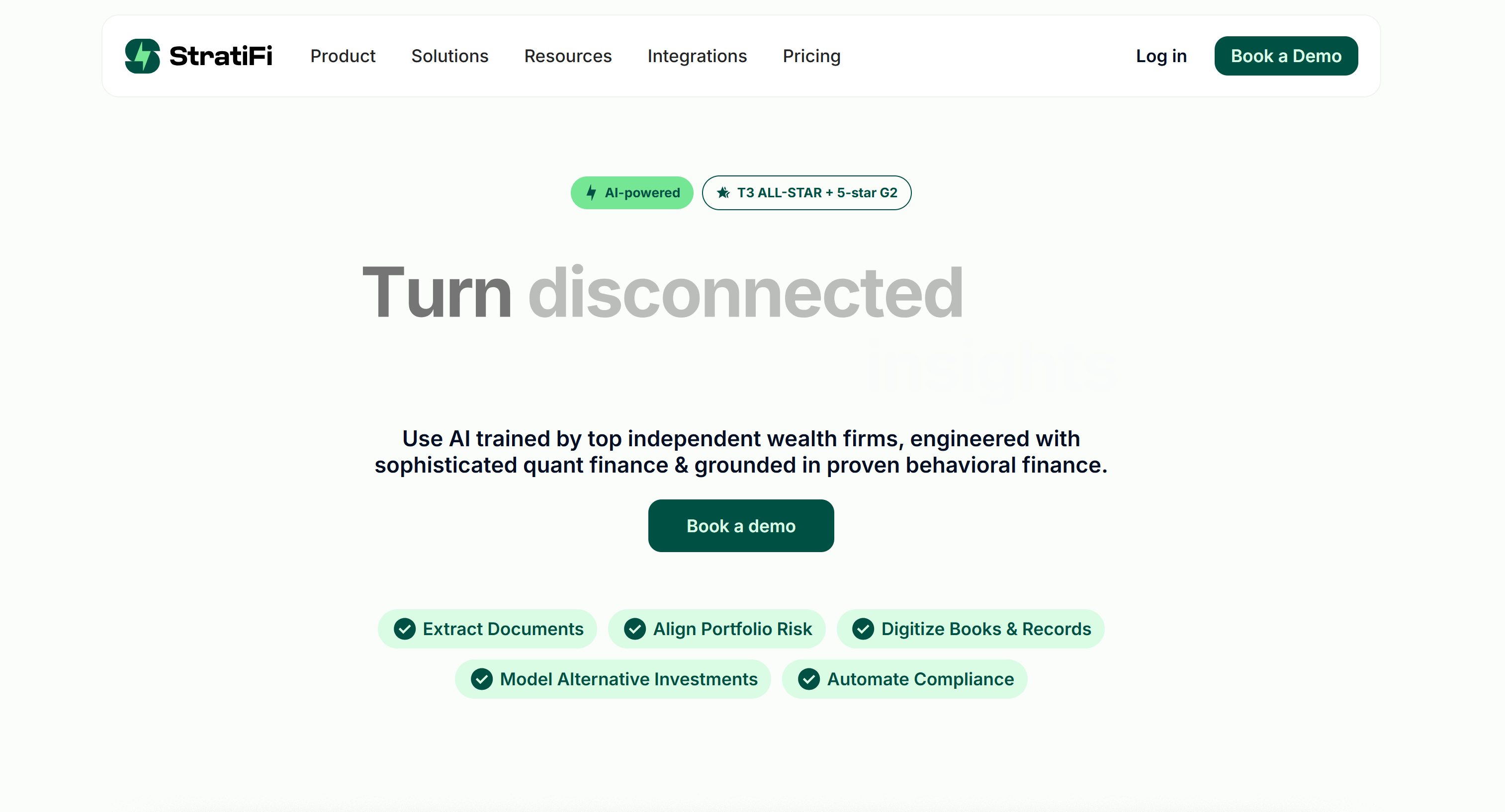
StratiFi operates as an intelligence layer across the firm. This AI-powered wealth management software connects portfolio data, behavioral risk, proposals, IPS creation, and compliance monitoring into a single system, where decisions and documentation are continuously aligned.
Why It Stands Out
Most platforms generate outputs. StratiFi builds defensibility. Risk, compliance, and advisory workflows do not operate separately. They learn from each other. Moreover, every decision is captured and contextualized. It is available for supervision without requiring manual effort.
Best For
- RIAs scaling advisor teams and client volume
- Broker-dealers managing regulatory exposure across accounts
- Firms looking to move from fragmented tools to a unified operating model
Strengths
- AI-enabled continuous monitoring at the account level, not periodic review
- Proposal to IPS workflows that remain connected to portfolio reality
- Compliance intelligence embedded directly into advisory decisions
- Documentation that builds as a byproduct of work, not an extra task
Considerations
- Not designed as a standalone point solution
- Delivers the most value when integrated across the existing stack
2. Redtail
What It Does
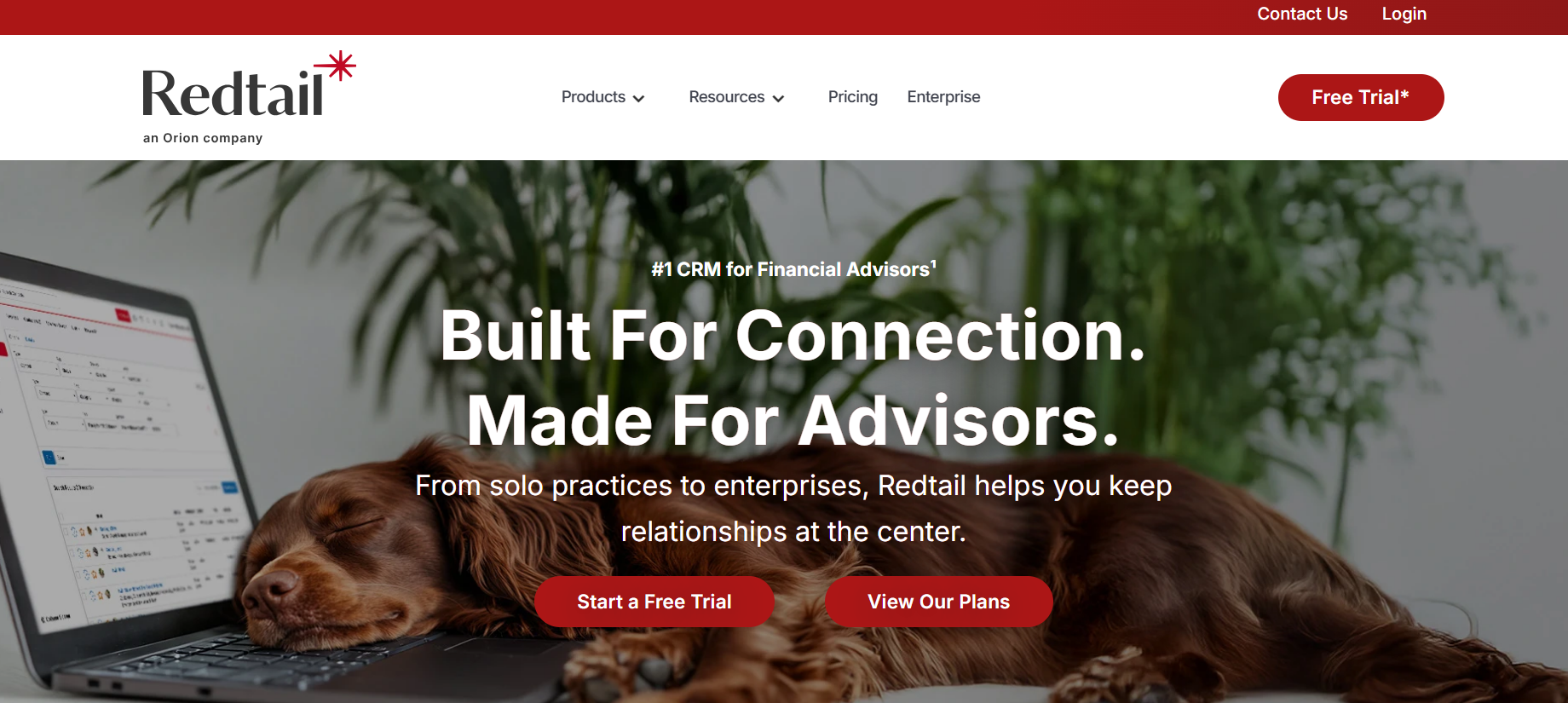
Redtail serves as a central system for managing client relationships, activities, and communication. This wealth management platform is widely adopted across RIAs and integrates with a broad ecosystem of advisory tools.
Why It Stands Out
This wealth management CRM is familiar, reliable, and easy to adopt. For many firms, it becomes the default system of record for client interactions.
Best For
- Mid-market RIAs with established tool stacks
- Firms prioritizing relationship management workflows
- Teams that need a stable and widely supported CRM
Strengths
- Strong integration ecosystem
- Simple and consistent user experience
- Broad adoption across advisory firms
Considerations
- Functions primarily as a CRM
- Does not provide portfolio insight, risk intelligence, or compliance oversight
- Requires multiple additional systems to complete the advisory workflow
3. Orion Advisor Tech
What It Does
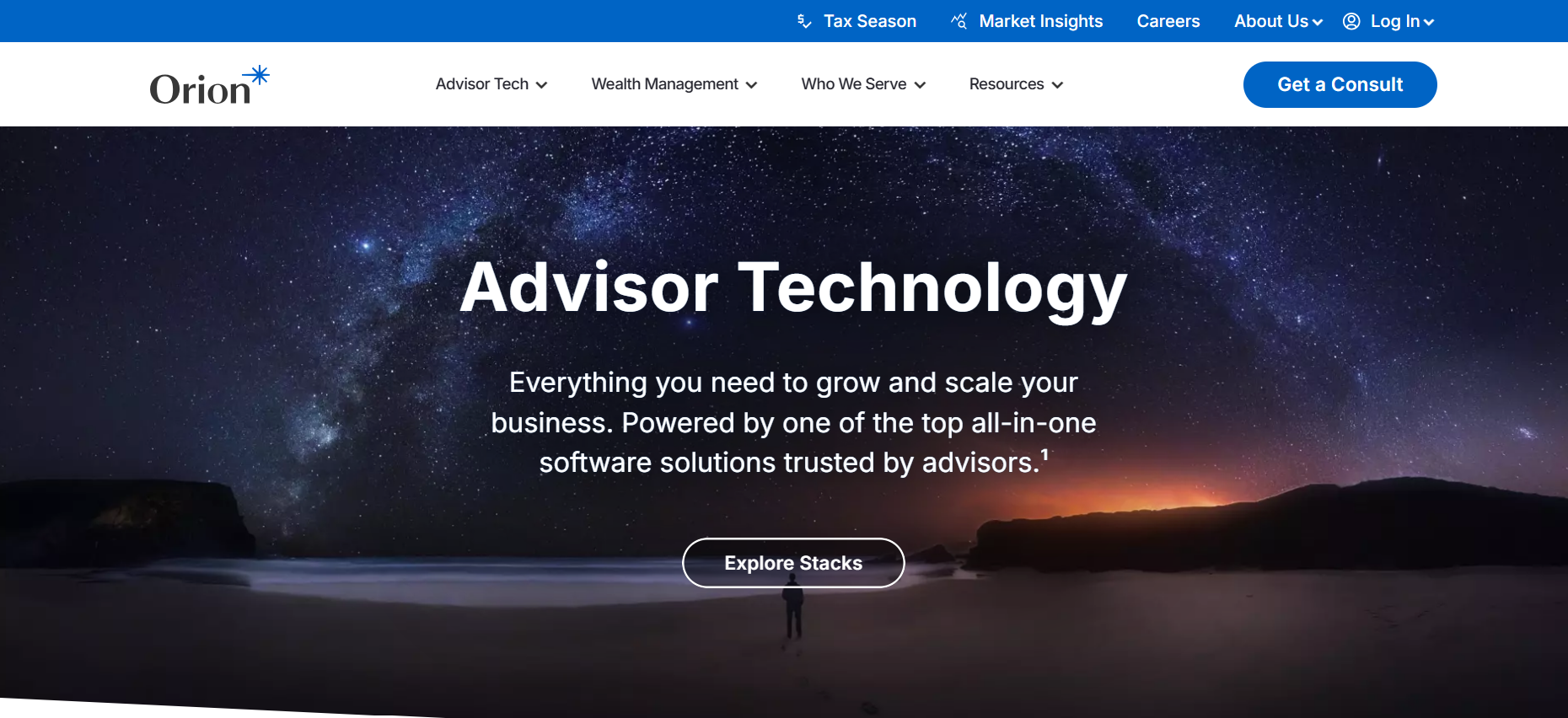
Orion focuses on portfolio accounting, performance reporting, and billing. This investment management platform enables firms to manage and report on client portfolios at scale.
Why It Stands Out
This financial advisor software brings operational structure to portfolio data. Firms with large numbers of accounts rely on it to maintain consistency in reporting and billing.
Best For
- RIAs managing high volumes of portfolios
- Firms that need structured reporting and billing workflows
- Operations teams supporting advisor scale
Strengths
- Robust portfolio accounting infrastructure
- Scalable performance reporting for RIAs
- Integrated billing capabilities
Considerations
- Primarily operational in nature
- Limited integration of compliance and risk intelligence into workflows
- Requires additional tools for advisory decision support
4. Nitrogen
What It Does
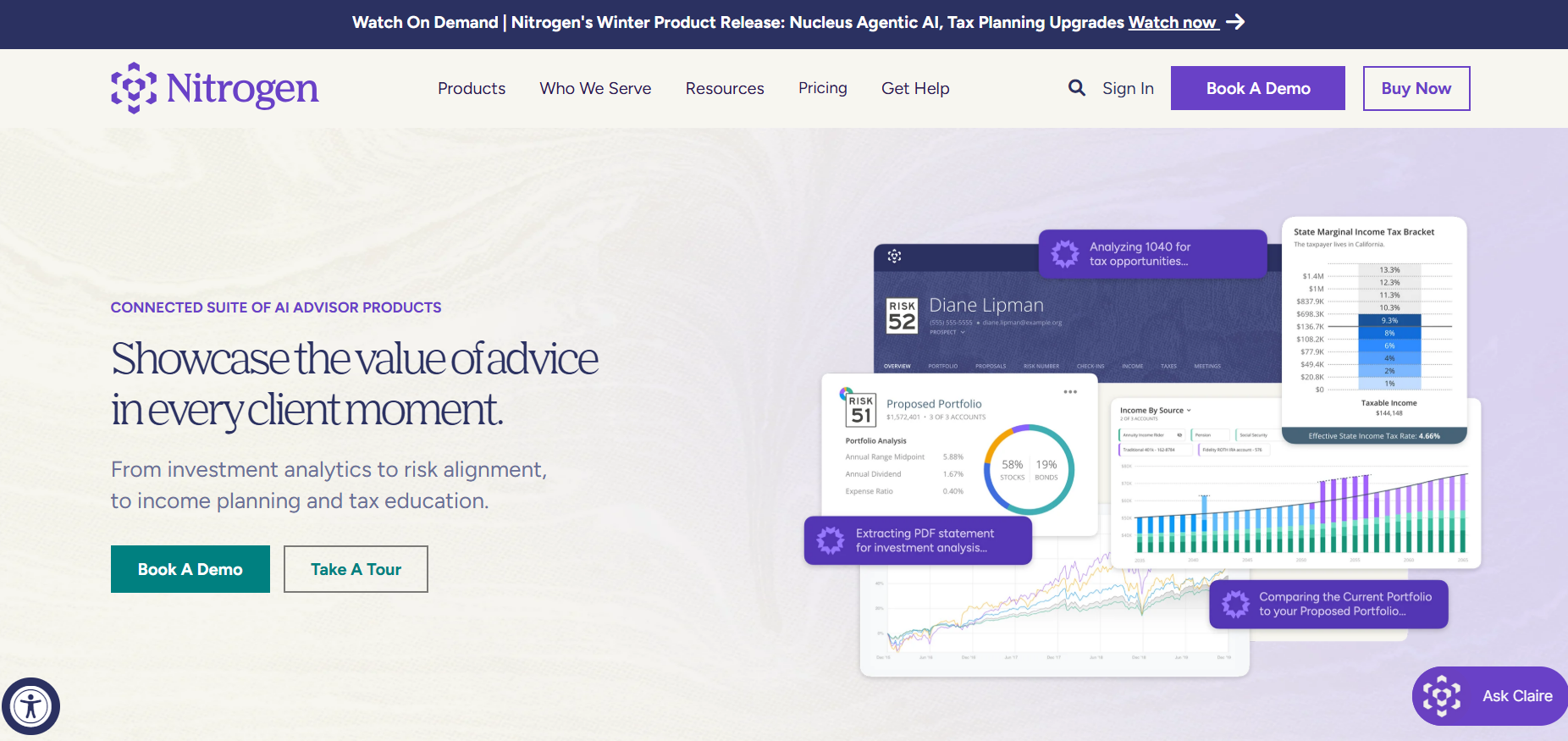
Nitrogen helps advisors quantify client risk and align portfolios accordingly. It is majorly used to support client conversations around risk and suitability.
Why It Stands Out
The investment management solution simplifies complex risk concepts that clients can understand. This makes it effective in building confidence during conversations.
Best For
- Advisors focused on improving client engagement
- Firms standardizing risk profiling
- Teams prioritizing suitability alignment
Strengths
- Clear and structured risk scoring approach
- Strong support for client-facing discussions
- Recognized framework across the industry
Considerations
- Focused primarily on risk profiling
- Does not extend into full compliance supervision
- Risk insights often remain separate from portfolio and documentation workflows
5. Morningstar Direct Advisory Suite
What It Does
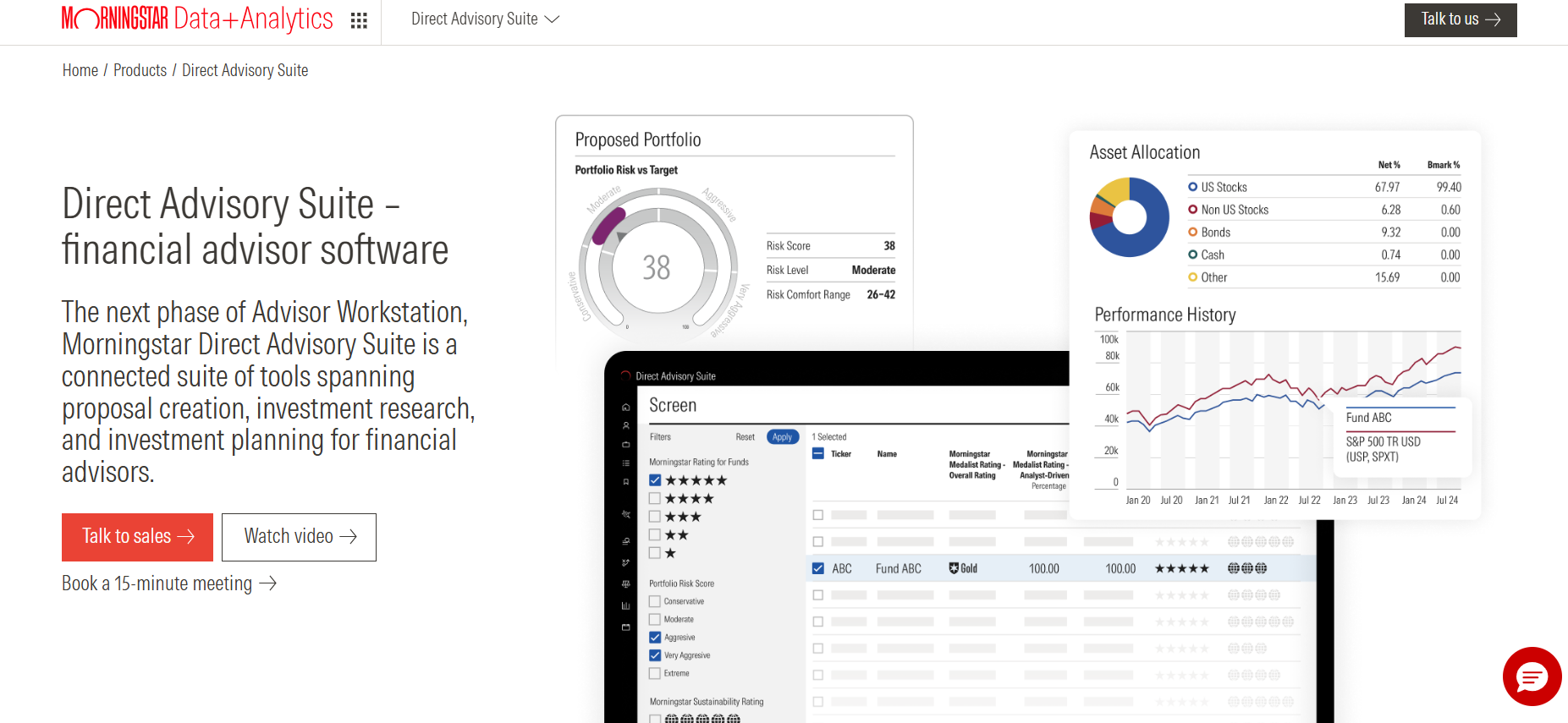
Morningstar provides investment research, portfolio analytics, and proposal tools. This portfolio management software for advisors helps with constructing and justifying portfolio strategies.
Why It Stands Out
This investment management solution’s strength lies in the depth of data. Advisors rely on it to validate decisions with credible research and analytics.
Best For
- Firms with research-driven investment processes
- Advisors building customized portfolios
- Teams focused on portfolio construction and analysis
Strengths
- Extensive investment research
- Strong analytics for portfolio design
- Trusted data foundation
Considerations
- Primarily focused on analysis and research
- Limited role in ongoing compliance or supervision
- Requires integration with execution and monitoring systems
6. Addepar
What It Does
Addepar aggregates data across custodians and asset classes, providing a unified view of complex portfolios. It is built for high-net-worth and institutional use cases.
Why It Stands Out
The wealth management software solution handles complexity seamlessly. Firms dealing with alternatives, multiple entities, and fragmented data sources rely on it for clarity.
Best For
- Multi-family offices and institutional advisors
- Firms managing alternative investments
- Teams requiring consolidated reporting across sources
Strengths
- Strong data aggregation capabilities
- Advanced reporting for complex portfolios
- Scales across high-value client segments
Considerations
- Focused on reporting and aggregation
- Does not provide integrated compliance or advisory intelligence
- Requires additional systems for decision support
7. Wealthbox
What It Does
Wealthbox provides a simple CRM for managing client relationships, tasks, and communication. It is designed for ease of use rather than complexity.
Why It Stands Out
This software for wealth managers reduces friction. Advisors can adopt it quickly without heavy training or process changes.
Best For
- Independent advisors and small RIAs
- Organizations that are starting to build their tech stack
- Teams prioritizing simplicity and ease of use
Strengths
- Clean and intuitive interface with fast onboarding
- Effective for basic relationship management
Considerations
- Limited beyond CRM functionality
- Does not support portfolio, risk, or compliance workflows
- May require replacement or expansion as the firm scales
Wealth Management Software Comparison
Here’s a quick comparison of leading wealth management platforms based on where they deliver the most value.
|
Platform |
Core Strength |
Compliance |
Integration |
Scale |
|
StratiFi |
Unified risk, compliance, proposals |
Continuous, built-in |
Fully connected workflows |
High |
|
Redtail |
CRM |
Limited |
Low |
Moderate |
|
Orion Advisor Tech |
Portfolio reporting |
Moderate |
Partial |
High (ops-focused) |
|
Nitrogen |
Risk profiling |
Limited |
Partial |
Moderate |
|
Morningstar Direct Advisory Suite |
Research and analytics |
Low |
Low |
Moderate |
|
Addepar |
Data aggregation |
Low |
Partial |
High (complex portfolios) |
|
Wealthbox |
CRM |
Minimal |
Low |
Moderate |
Firm Situation Framework to Choose the Right Software
With the wealth management platform comparison in mind, the next step is to match your firm’s priorities with the platforms that deliver the capabilities you need most.
Choosing the right software for wealth managers is not about features alone. It depends on whether the platform solves your primary constraint and supports how your firm operates at scale.
Research from Deloitte reveals that advisors still spend a significant portion of their time on operational tasks rather than client-facing activities. However, systems that integrate workflows, data, and oversight from the start help firms reduce inefficiency and support defensible decision-making.
|
Primary Challenge |
Tools Capabilities to Prioritize |
|
Compliance and exam readiness |
Platforms with continuous monitoring, embedded documentation, and Reg BI alignment |
|
Scaling advisors |
Platforms that reduce manual work per advisor, automate documentation, and maintain supervisory visibility as headcount grows |
|
Winning clients |
Proposal tools and risk communication platforms that translate portfolio strategy into clear client conversations |
|
Data fragmentation |
Platforms with unified data foundations where portfolio, compliance, and client data share the same source of truth |
|
Question to ask: Will this tool reduce operational risks or add another system to manage? |
|
5 Signs It’s Time to Move beyond Your Current Tech Stack
Even with the right mix of tools, many firms reach a point where the stack itself becomes the constraint. Industry reports reveal that most RIAs rely on an average of eight platforms per firm. This creates fragmented data and disconnected workflows. Adding more tools without integration compounds operational risk.
What once supported growth starts creating friction across workflows, compliance, and decision-making.
Here are the five key signs to watch for:
#1: Advisors spend more time on administration than on clients
Manual work begins to dominate the day. The time that should be dedicated to building client relationships is spent managing systems and processes. This directly impacts productivity and client experience.
#2: Compliance preparation takes weeks before exams
Documentation is not readily available and must be assembled manually. This increases pressure and exposes gaps in supervision.
#3: Data lives in five or more disconnected systems
Critical information lives in multiple disconnected platforms. Advisors spend time reconciling data instead of acting on it. This slows down decisions and increases the risk of inconsistencies.
#4: Leadership lacks visibility into firm-wide risk
Supervisory insight is delayed and incomplete. Leadership relies on manual reporting to understand exposure. Risk is identified after the fact rather than being managed continuously.
#5: Growth is creating operational bottlenecks instead of scale
Adding clients or advisors increases operational complexity. Existing processes struggle to keep up with scale. What should drive efficiency starts creating bottlenecks instead.
If you recognize these signs, the issue is not isolated inefficiencies. It is an infrastructure problem.
Firms that scale effectively do not add more tools to solve this issue. They adopt systems where workflows, data, and oversight are connected from the start.
StratiFi enables this by bringing risk, compliance, and advisory workflows into a single operating layer. This AI-enabled compliance solution enables firms to reduce manual effort, improve visibility, and ensure every decision is documented and defensible.
Book a demo to understand how StratiFi can help your firm reduce operational risk and scale with confidence.
FAQs
What Software Do Wealth Managers Use?
Wealth managers use portfolio, risk, compliance, CRM, and reporting tools. Most firms operate across multiple systems. The real challenge is ensuring these tools work together and support connected decision-making.
What Is the Best Software for Wealth Managers in 2026?
There is no single best platform. The right choice depends on firm size, compliance exposure, and growth goals. Platforms that connect workflows and intelligence deliver the most long-term value.
What Features Should Wealth Management Software Have?
Key features of a wealth management software include continuous monitoring, integrated workflows, automated documentation, and alignment with compliance requirements. Software should reduce manual effort and ensure decisions are consistent, visible, and defensible across the firm.
What Is the Difference Between Portfolio Management Software and Wealth Management Software?
Portfolio tools focus on tracking and reporting investments. Digital wealth management software connects portfolio data with risk, compliance, and advisory workflows. This helps support decision-making and client communication.
How Do Wealth Managers Choose Software for Their Firm?
Firms should start by understanding their primary challenge. The right platform addresses constraints, such as compliance, scale, or data fragmentation. Moreover, it integrates into workflows rather than adding another disconnected system.
How Much Does Wealth Management Software Cost?
Wealth management software costs vary according to features, firm size, and integrations. Firms should evaluate total cost in terms of operational efficiency and scalability, not just upfront pricing.