%2010.svg)


Table Of Contents

Portfolio risk has become central to how RIAs operate, yet most firms still manage it through fragmented tools and static assessments.
As portfolios grow complex and client expectations increase, advisors are expected to explain risk clearly and monitor it continuously.
Furthermore, they should align it with evolving market conditions. However, this is difficult to achieve with point-in-time risk scores and disconnected systems.
For instance, an advisor preparing for a client review may rely on a risk score generated months ago. However, the actual portfolio might have shifted due to market movements or new allocations. This creates a gap between what the advisor presents and the portfolio’s current risk exposure. As a result, client conversations became less precise and harder to defend.
The best investment risk analytics software addresses this challenge by providing continuous portfolio visibility and real-time stress testing.
It provides tools that translate risk into clear, actionable insights. This allows advisors to move from static assessments to dynamic risk management, supporting client communication and supervisory oversight.
In this guide, we’ll focus on investment risk analytics software tools that are actually relevant to RIAs, helping them combine portfolio risk analysis, analytics, reporting, and advisor workflows into a single operating model.
What RIAs Should Actually Expect from Investment Risk Analytics Software?
Most investment risk analytics software tools promise visibility. However, they operate in silos or rely heavily on static inputs. This creates a disconnect between perceived risk and actual portfolio behavior.
For RIAs, the expectation from a risk analytics platform should go beyond scoring. It should reflect how portfolios behave in real time and how advisors make decisions around them.
Here are the core capabilities for an investment analytics software to consider.
Portfolio-Level Risk Visibility, Not Just Questionnaire-Based Scoring
Risk should be measured based on actual holdings, allocations, and exposures, not just client responses. For instance, two clients with the same risk score may hold very different portfolios. One may have a diversified allocation across asset classes. The other may be concentrated in a single sector or security, increasing downside risk despite having the same stated risk tolerance.
Stress Testing and Scenario Analysis for Real Portfolios
Advisors should be able to simulate how portfolios behave under different market conditions. Running a scenario where interest rates rise or equities decline can help advisors proactively explain potential losses. Moreover, they can reposition portfolios if needed.
Risk Communication That Helps Advisors Explain Trade-Offs Clearly
Risk analytics should translate complex data into insights that clients can understand. For instance, the system should help advisors explain what a potential 15% drawdown means for a client’s financial goals rather than showing volatility numbers.
Portfolio Analytics and Reporting That Support Client Reviews
Reporting should connect performance, risk, and allocation and support meaningful conversations. For example, during a quarterly review, advisors should be able to show how portfolio changes impacted risk. Also, they should explain whether it remains aligned with the client’s profile.
Operational Fit with Proposals, Portfolio Management, and Supervisory Workflows
Risk analytics should not sit as a standalone tool. It should integrate into how advisors build proposals, manage portfolios, and how firms supervise risk. For instance, when creating a proposal, advisors should immediately see how the recommended portfolio aligns with client risks. This should be done without switching systems.
The gap in most tools is not capability but connection. Without integrating these functions into a single workflow, risk remains fragmented.
The key here is to evaluate and choose the right investment analytics software.
7 Best Investment Risk Analytics Software Tools for RIAs
Choosing the right risk analytics platform depends on how your firm approaches portfolio risk. While many tools address specific parts of the workflow, only a few connect risk analysis with client communication and supervisory oversight.
Here are the seven best risk analytics software tools for RIAs.
1. StratiFi
What It Does
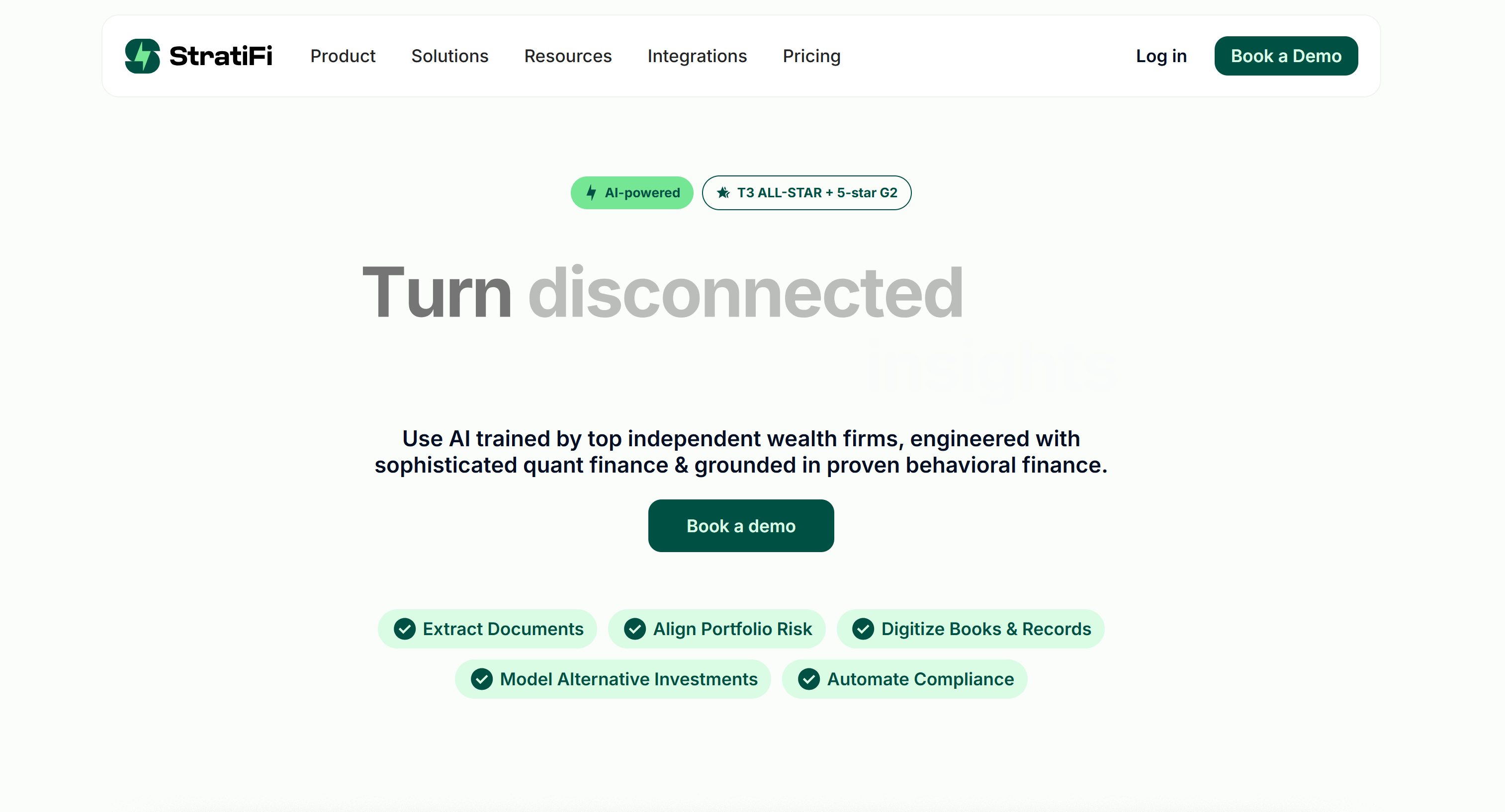
StratiFi provides portfolio risk intelligence across advisory and compliance workflows. This AI-powered investment analytics software connects portfolio data, behavioral risk, proposals, and supervision into a unified system.
Why It Stands Out
StratiFi goes beyond static scoring by delivering portfolio-aware risk intelligence based on actual holdings and exposures. This portfolio analysis software links risk insights directly to client communication and supervisory workflows, ensuring consistency across decisions. Continuous monitoring and embedded documentation make every recommendation defensible.
Best For
- RIAs scaling advisor teams and client portfolios
- Organizations that are moving toward unified advisory intelligence systems.
Firms that need continuous risk management and monitoring.
2. Nitrogen
What It Does
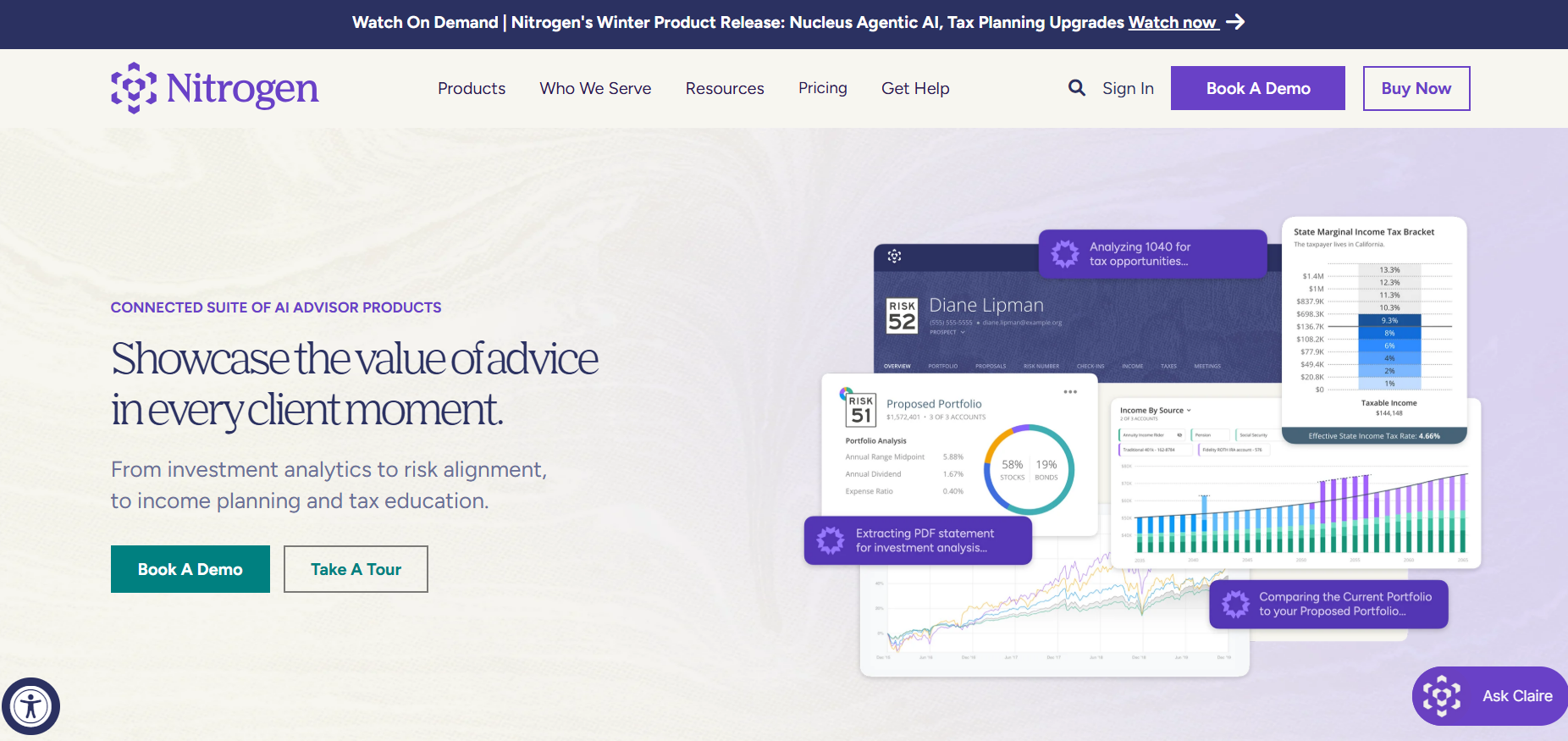
Nitrogen focuses on risk tolerance and client engagement. This financial risk management software helps advisors quantify risk preferences and align portfolios accordingly. It is mainly used to support prospecting and client conversations.
Why It Stands Out
The portfolio risk tool simplifies risk concepts into client-friendly outputs, making it effective for communication and engagement. Advisors can clearly present risk alignment during onboarding and proposal discussions.
Best For
- Advisors focused on client engagement and onboarding
- Firms standardizing risk tolerance workflows
- Teams prioritizing prospect conversion through risk conversations
3. YCharts
What It Does
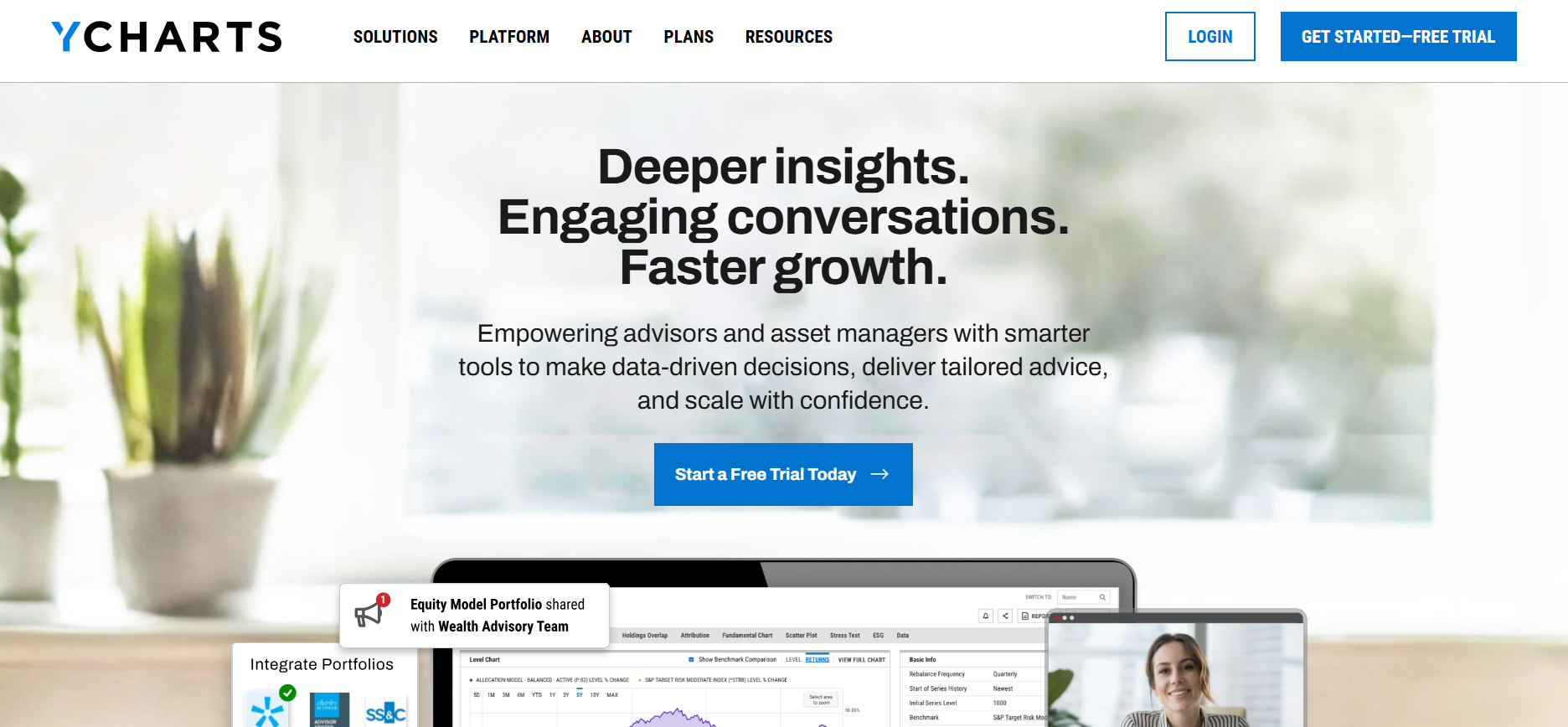
YCharts combines market data, analytics, and presentation tools to support investment research and client communication. This financial risk management tool includes portfolio analytics and visual reporting capabilities.
Why It Stands Out
This investment risk software enables advisors to create visually engaging reports and presentations. As a result, firms can simplify complex market and portfolio insights for clients.
Best For
- Advisors focused on research-driven insights
- RIAs prioritizing client presentations and reporting
- Teams that rely on market data for storytelling
4. Kwanti
What It Does
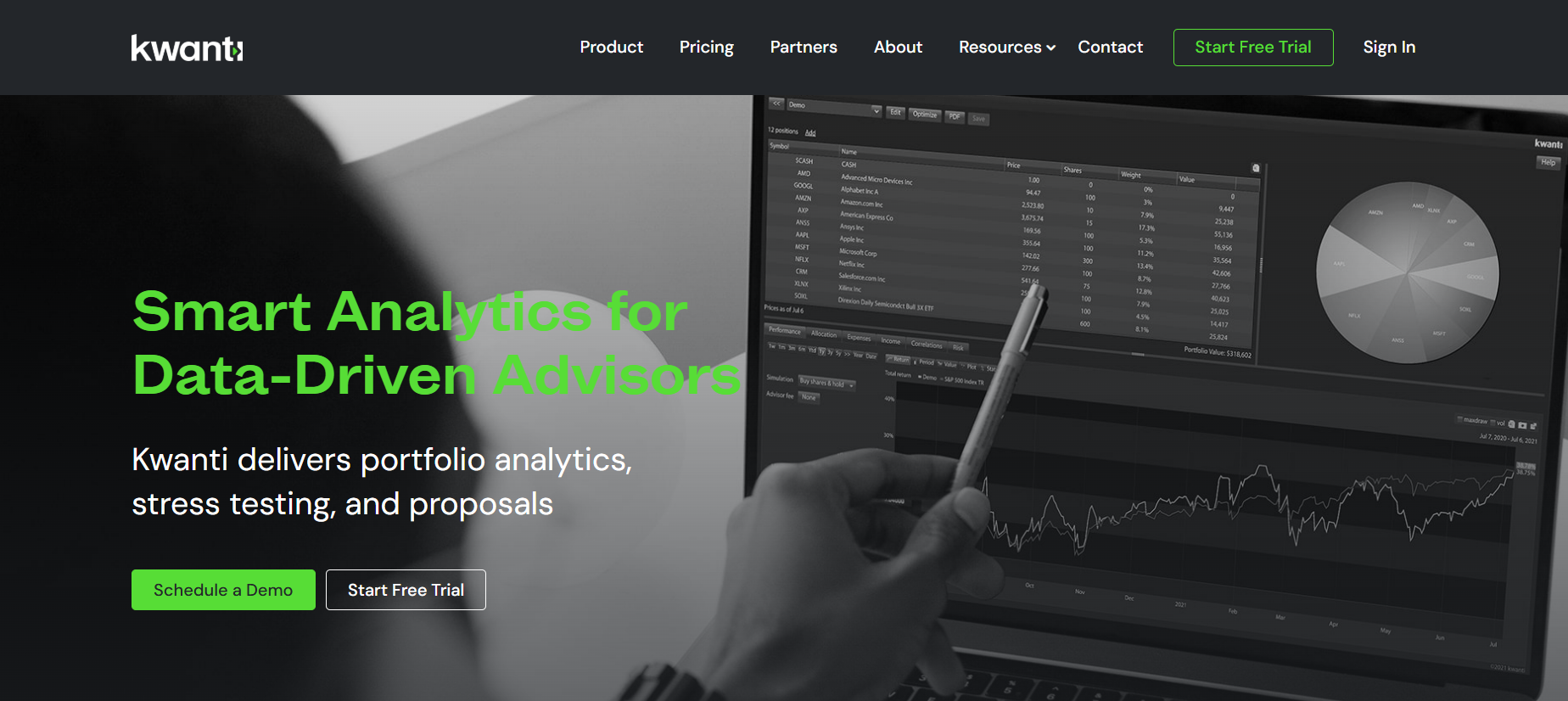
This portfolio risk analysis software provides portfolio analytics and stress testing tools. Kwanti allows advisors to analyze portfolios and demonstrate potential outcomes during client conversations.
Why It Stands Out
Kwanti is designed for proposal-driven analytics. It enables advisors to compare portfolios and run scenario analysis quickly.
Best For
- Firms prioritizing proposal and onboarding workflows
- Advisors comparing portfolio scenarios for clients
- Teams focused on acquisition-stage analytics
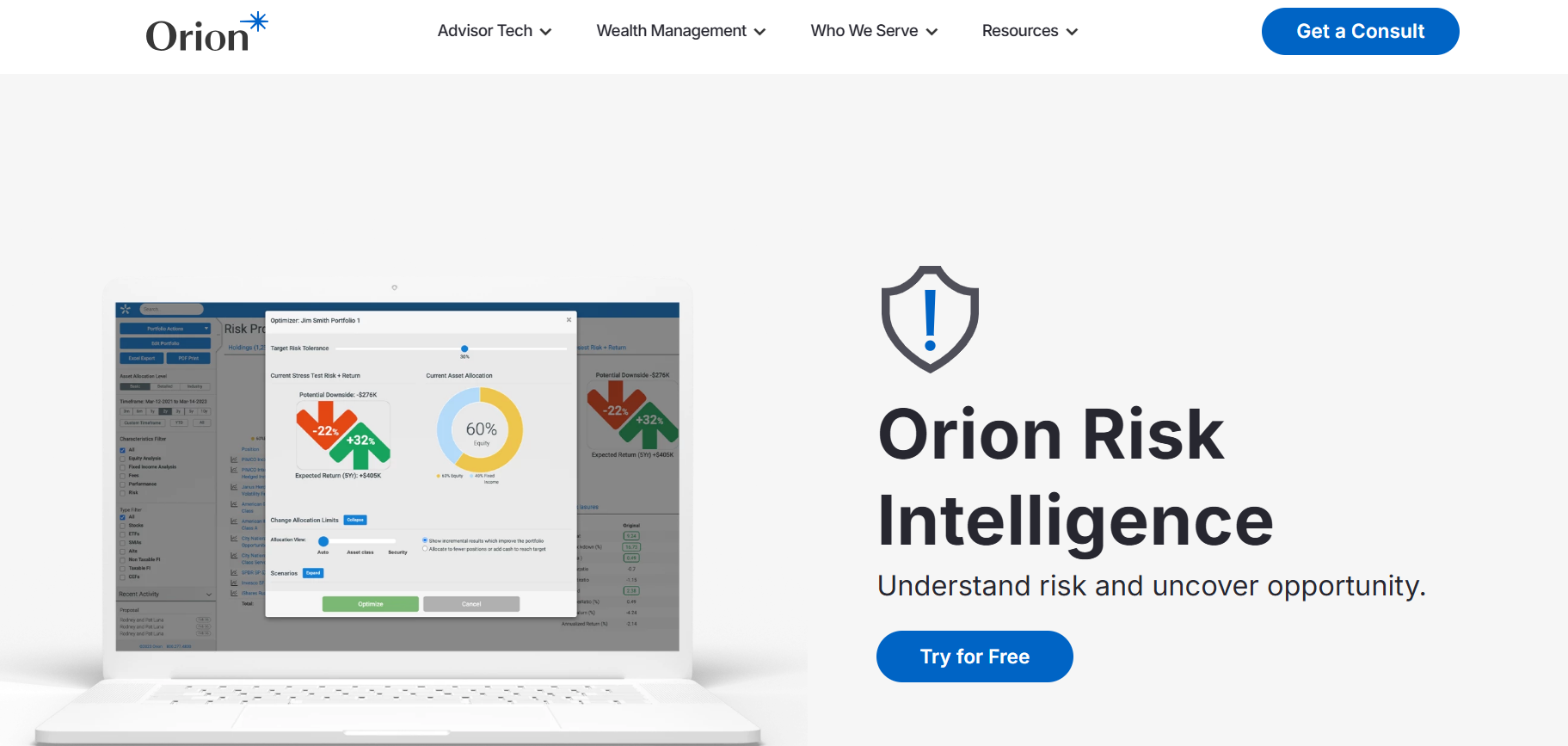
5. Orion Risk Intelligence
What It Does
Orion Risk Intelligence offers risk analytics and stress testing as part of the broader Orion ecosystem. It integrates with portfolio management and reporting tools within a unified platform.
Why It Stands Out
For firms already using Orion, risk analytics becomes a natural extension of their existing workflows. This risk analytics software allows advisors to evaluate portfolio risk without moving outside the ecosystem.
Best For
- RIAs already using the Orion platform
- Firms needing embedded risk analytics within operations
- Teams managing large volumes of portfolios
6. Addepar
What It Does
This portfolio risk tool provides portfolio analytics and reporting for complex, multi-asset portfolios. Addepar offers a consolidated view by aggregating data across custodians and asset classes.
Why It Stands Out
The portfolio analysis software platform is suitable for firms managing alternatives, private markets, and multi-entity portfolios. Its analytics support deep portfolio analysis at scale.
Best For
- Firms managing complex and alternative investments
- Multi-family offices and institutional advisors
- Teams requiring consolidated multi-custodian reporting
7. OnPointe Risk Analyze

What It Does
OnPointe Risk Analyze focuses on portfolio fit analysis and advisor-led risk conversations. This portfolio analysis software helps advisors evaluate how portfolios align with clients’ risk preferences.
Why It Stands Out
The investment risk analytics software platform emphasizes practical, advisor-driven risk discussions. It supports clear alignment between portfolio construction and client expectations.
Best For
- Advisors focused on portfolio fit and suitability
- Firms prioritizing structured risk conversations
- Teams aligning portfolios with client expectations
While these tools address different parts of the risk workflow, choosing the right one depends on how well it aligns with your firm’s priorities and operating model.
Before We Conclude!
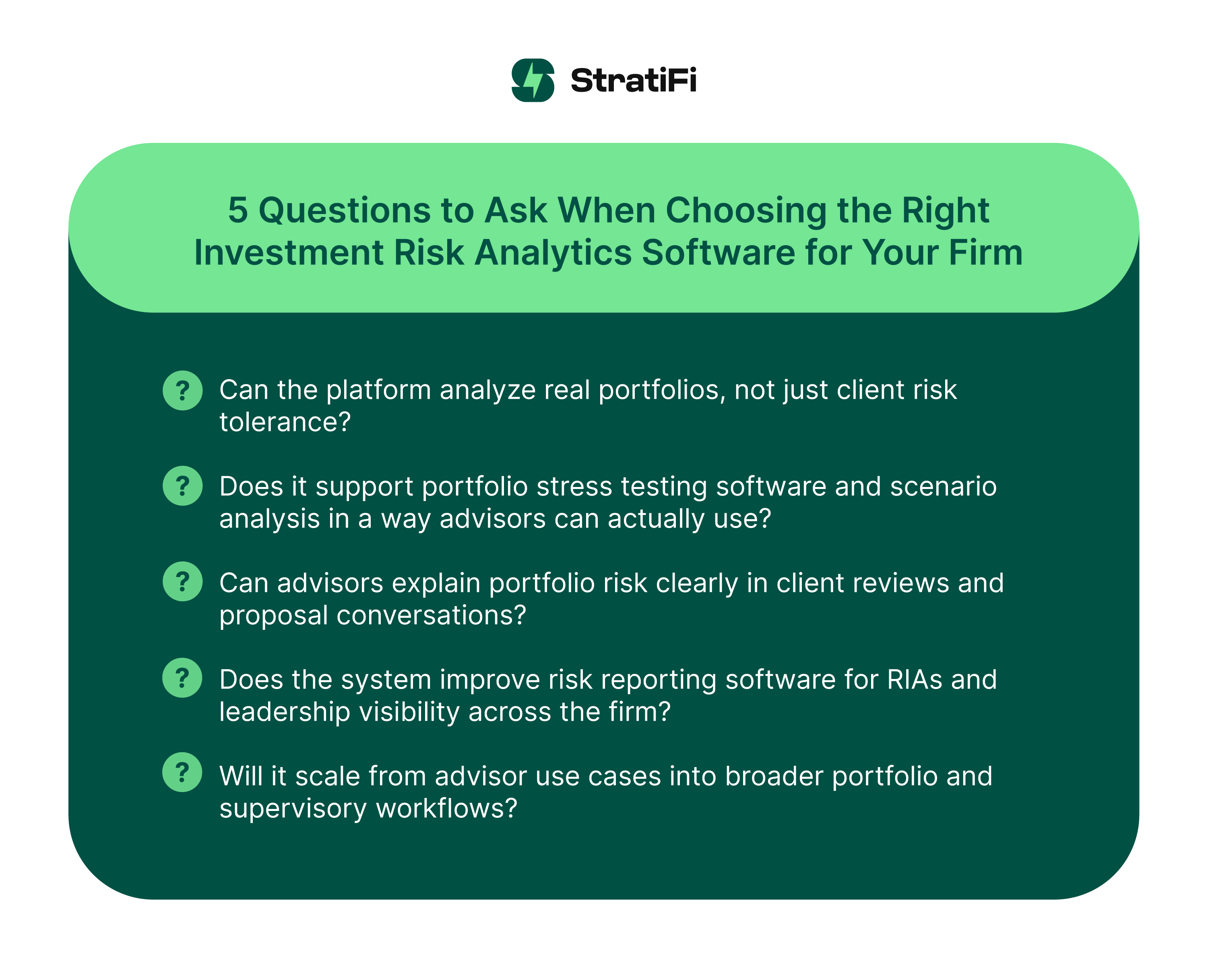
Most investment risk analytics tools work on one part of the workflow, but rarely the full picture. This creates gaps that become more visible as firms scale. Moreover, this challenge is widely recognized across the industry.
A recent McKinsey study highlights that data silos and fragmented systems continue to limit the effectiveness of data-driven organizations, particularly when insights are not connected across workflows.
Here’s where most tools fall short:
- Insights exist, but they are not translated into clear, client-friendly conversations.
- Reports summarize data, but do not provide deeper insight into real portfolio risk exposure.
- Risk is measured at onboarding, but not continuously tracked against actual portfolios.
- Individual workflows are efficient, but leadership lacks a consolidated view of risk across the firm.
A winning financial risk management software like StratiFi addresses these gaps by connecting risk across the advisory lifecycle.
StratiFi does this by -
- Smartly combining portfolio analytics, stress testing, advisor workflows, risk reporting, and supervisory visibility into one connected system.
- Understanding portfolio risk in context, based on actual holdings and market conditions rather than static assumptions.
- Communicating risk clearly to clients, helping advisors thoroughly explain trade-offs and potential outcomes.
- Maintaining consistency as the firm scales, ensuring risk, reporting, and oversight stay aligned across teams and accounts.
Book a demo and understand how StratiFi can help your firm move from fragmented risk tools to continuous, defensible risk intelligence.
FAQs
What is Investment Risk Analytics Software?
Investment risk analytics software helps RIAs evaluate and monitor portfolio risk based on actual holdings and market conditions. It enables continuous visibility into exposures, supporting better decisions, client communication, and supervisory oversight.
What Features Should Investment Risk Analytics Software Include?
Investment risk analytics software should include features such as portfolio-level risk visibility, stress testing, and clear risk communication tools. Moreover, it integrates with advisor workflows, supports reporting, and enables continuous monitoring across portfolios and clients.
How Do RIAs Use Investment Risk Analytics Software?
RIAs use investment risk analytics software to monitor portfolio risk, run scenario analysis, and align portfolios with client profiles. Furthermore, it supports client reviews, proposal creation, and ongoing supervision.
What is the Difference Between Risk Tolerance Software and Portfolio Risk Software?
Risk tolerance software measures a client’s willingness to take risks using questionnaires and scoring models. On the other hand, portfolio risk software evaluates actual portfolio behavior, including exposures, volatility, and downside risk, based on real holdings.
What is Portfolio Stress Testing Software?
Portfolio stress testing software simulates how portfolios perform under different market scenarios, such as interest rate changes or market downturns. It helps advisors assess potential losses.
How do RIAs Choose Risk Analytics Software?
RIAs choose risk analytics software based on their need for portfolio visibility, client communication, and workflow integration. The right platform should support continuous monitoring and scale with the firm.