%2010.svg)


Table Of Contents

Managing growth in a financial advisory firm brings compliance complexity that can quickly overwhelm manual processes.
For instance, a mid-sized RIA managing hundreds of accounts may need weeks to prepare for a Reg BI audit. Here, advisors and operations staff must gather client communications, portfolio reports, suitability analyses, and supervisory notes from multiple systems.
Any missing or inconsistent data can trigger follow-ups and increased regulatory risk. This takes time away from client-focused work. Moreover, it creates a gap between regulatory expectations and operational capacity.
AI is changing how firms approach regulatory oversight. It enables continuous monitoring of portfolios, advisor behavior, and compliance documentation in real-time. This ensures every decision is tracked and defensible.
In this post, we’ll share what AI for regulatory compliance means for financial advisors, how it works, what to look for in a solution, and the top five tools in the market today.
What Is AI for Regulatory Compliance in Financial Services?
AI for regulatory compliance uses machine learning, automation, and intelligent monitoring to help firms meet regulatory obligations continuously. It enables real-time oversight and early risk detection. Most importantly, it provides consistent documentation across workflows rather than relying on periodic reviews.
This means compliance becomes an ongoing process rather than a point-in-time activity. Systems can monitor portfolios, advisor actions, and client interactions simultaneously, thereby ensuring issues are identified and addressed as they occur.
For financial advisors, this translates into:
- Continuous Oversight: AI monitors portfolios and advisors’ activity in real-time. It does not rely on quarterly or annual reviews. For instance, a suitability mismatch is flagged immediately when a trade is executed, rather than being discovered weeks later during an audit.
- Alignment with Reg BI and Suitability Requirements: Compliance is directly tied to advisory decisions, ensuring recommendations are in the client’s best interest. If a portfolio drifts beyond a client’s risk tolerance, the system flags it and prompts review before further action.
- Integrated Marketing and Communication Compliance: AI reviews communications across channels to ensure alignment with regulatory standards. For example, a client email is flagged if it contains unsubstantiated performance claims.
- Automated Record-Keeping and Documentation: Documentation is created as a byproduct of workflows, rather than being assembled manually during exams. Every recommendation, risk assessment, and approval is automatically logged with supporting data.
- Connected Supervisory Oversight: Supervisors gain visibility across accounts, advisors, and risks without manual reporting. This means compliance teams can view firm-level exposure and drill down into specific accounts where exceptions occur.
Why AI Matters for Compliance in Advisory Firms
Compliance in advisory firms has moved beyond periodic reviews and checklist-based processes. As firms grow, the volume of data, complexity of portfolios, and pace of regulatory change make traditional approaches difficult to sustain. What once worked for smaller teams starts to break under scale.
AI becomes critical in this environment because it shifts compliance from manual oversight to continuous, system-driven intelligence.
Here are the key pain points that RIAs face:
- Volume at Scale: Advisors manage hundreds of accounts, each with ongoing transactions, portfolio changes, and client interactions. Manual reviews cannot keep pace with this level of activity.
- Portfolio Complexity: Modern portfolios include alternatives, structured products, and multi-asset strategies. Static rules and basic checks often fail to capture nuanced risks. For example, a structured product may meet allocation rules but still introduce risk misalignment that goes undetected.
- Documentation Pressure: Regulators expect firms to demonstrate continuous supervision, not just maintain policies. Evidence must be complete, consistent, and readily available. During an audit, firms must show why each recommendation was appropriate at the time it was made.
- Evolving Regulations: Frameworks, such as Reg BI, marketing rules, and fiduciary standards, continue to change. Manual systems struggle to adapt quickly and consistently across the firm. For instance, a regulatory update may require reviewing client communications across multiple channels at once.
These challenges compound as firms scale. AI addresses them by handling monitoring, pattern detection, and documentation at a speed and consistency that manual processes cannot sustain. Industry reports state that 63% of advisors already leverage AI in their workflows. The adoption is focused on documentation, onboarding, and operational oversight.
How AI-Driven Regulatory Compliance Works: A Step-by-Step View
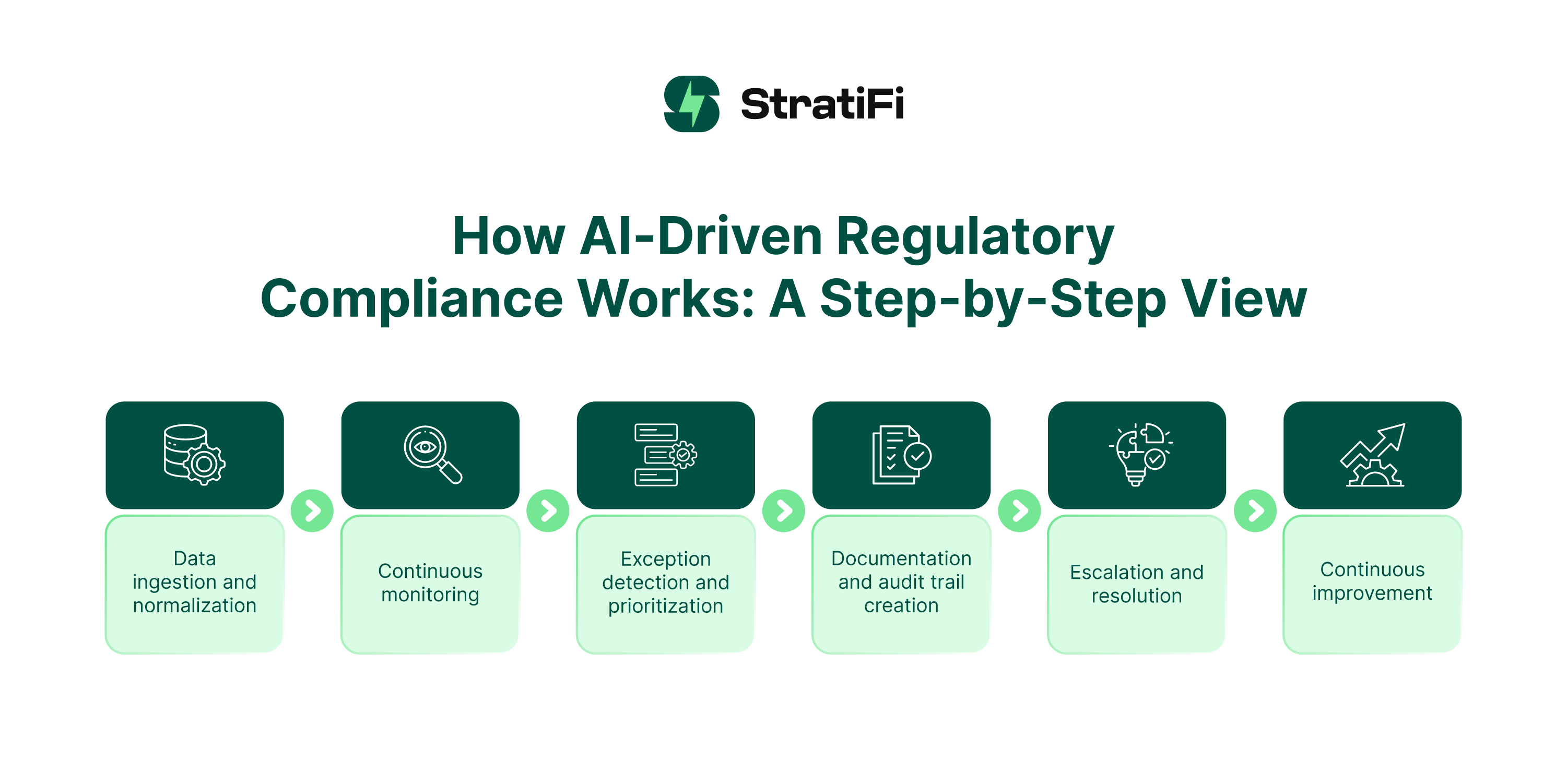
AI-driven compliance is not a single feature. It is a continuous system that connects data, monitoring, supervision, and documentation into a workflow. Instead of reacting to issues after they occur, firms gain the ability to detect, document, and resolve risks as part of everyday operations.
This creates a compliance process that is consistent and aligned with how advisory decisions are actually made.
Here’s a step-by-step view of how AI-driven regulatory compliance works.
Step #1. Data Ingestion and Normalization
AI systems pull data from multiple sources, including custodians, CRMs, portfolio systems, and communication tools, in a unified structure. For instance, client profiles, transaction history, and portfolio holdings from different systems are aligned into a single view. This ensures that all inputs are standardized and comparable across accounts and advisors.
Step #2. Continuous Monitoring
Once data is unified, AI continuously monitors accounts and advisor activity in real-time. It checks for issues, such as portfolio drift, concentration risk, suitability mismatches, and share-class conflicts as they occur. If a portfolio moves outside a client’s risk tolerance due to market changes, the system flags it immediately.
Step #3. Exception Detection and Prioritization
Not every alert requires action. AI filters and prioritizes exceptions based on severity, impact, and regulatory relevance. For instance, a high-risk suitability breach is escalated ahead of a minor allocation deviation. This way, compliance teams can focus only on what matters.
Step #4. Documentation and Audit Trail Creation
Every action, alert, and decision is automatically recorded. This creates a complete and time-stamped audit trail without requiring manual documentation. For instance, when an advisor reviews and resolves an alert, the system logs the rationale, supporting data, and time stamps.
Step #5. Escalation and Resolution
Flagged issues are assigned to the appropriate teams for review and resolution. The system tracks who acted, when action was taken, and how the issue was addressed. For instance, a compliance officer receives a flagged trade, reviews it, and documents the resolution within the same system.
Step #6. Continuous Improvement
Over time, the system learns from historical data, prior alerts, and regulatory updates. If certain patterns consistently result in valid alerts, the system becomes better at identifying similar risks earlier. This improves detection accuracy and reduces false positives.
What to Look for in an AI Compliance Software
The right platform should make compliance continuous, connected, and defensible without adding operational burden.
Here are the key capabilities to look for in an AI compliance software.
- Account-Level Monitoring: The system should monitor compliance at the individual account level, not just at a portfolio or firm level. This ensures risks are identified where they occur and addressed before they scale.
- Explainable Alerts: AI must provide clear reasoning behind every alert. Without context, alerts create noise rather than actionable insight. Instead of simply flagging a trade, the system should explain that it breaches a client’s risk profile or concentration limits.
- Embedded Documentation: Documentation should be created automatically as part of daily workflows. This eliminates the need to reconstruct evidence during audits.
- Reg BI and Suitability Linkage: Compliance should be directly tied to advisory decisions, ensuring recommendations align with regulatory requirements and client profiles.
- Scalable Supervision: The system should support growth without requiring a proportional increase in compliance resources. Oversight must remain consistent as the firm expands. For instance, a compliance team should monitor hundreds of additional accounts without increasing manual review effort.
- Advisor Workflow Integration: Compliance tools must integrate into the advisor’s workflow rather than separate systems. This reduces friction and improves adoption.
5 AI Tools for Regulatory Compliance for Financial Advisors
With a clear understanding of how AI-driven compliance works and key capabilities, the next step is finding the best compliance AI tool. While many platforms address specific parts of compliance, only a few connect monitoring, documentation, and supervision in a meaningful way.
Here are five AI-driven compliance solutions for finance tools.
1. StratiFi
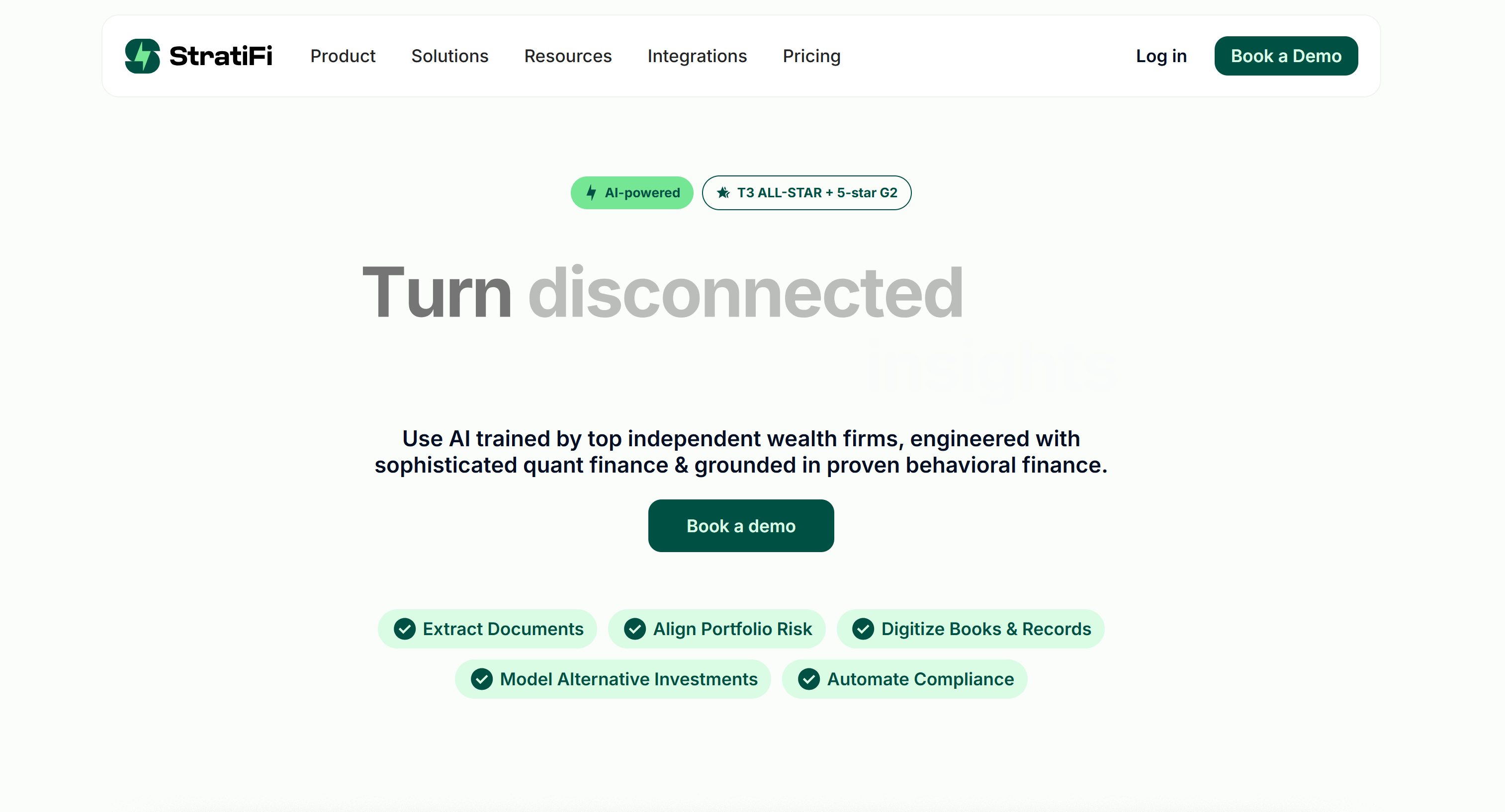
StratiFi delivers continuous, account-level compliance intelligence embedded directly into advisory workflows. This regulatory compliance automation tool connects portfolio activity, behavioral risk, proposals, and compliance monitoring into a single system/ It ensures that every decision is tracked and documented in real-time. This creates a unified layer in which risk, compliance, and advisory actions inform one another, making decisions consistently defensible.
2. Hadrius
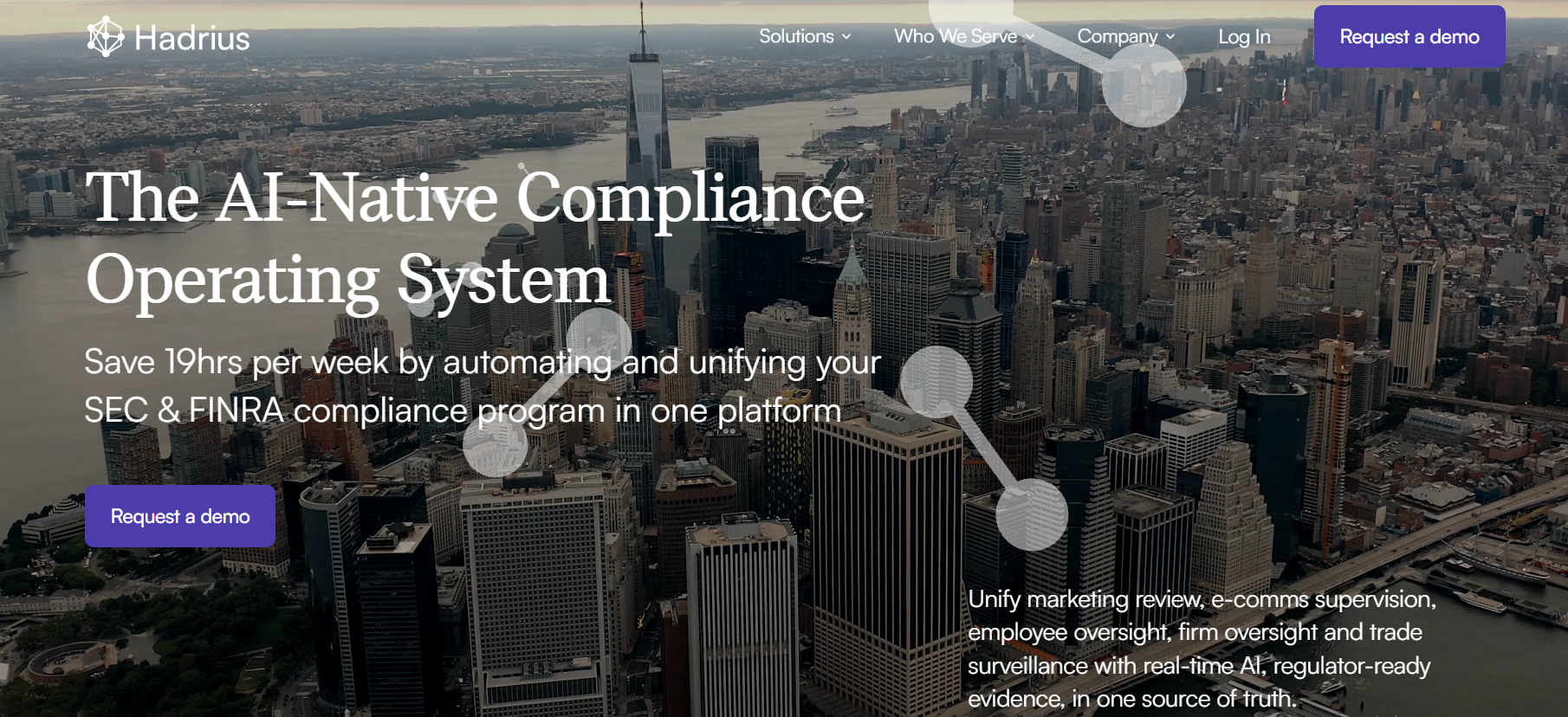
Hadrius automates compliance operations across filings, monitoring, and internal processes. This regulatory compliance tool helps firms reduce manual workload by streamlining repetitive compliance tasks and centralizing workflows. However, its focus remains on operational efficiency rather than deeply integrated advisory intelligence.
3. Smarsh
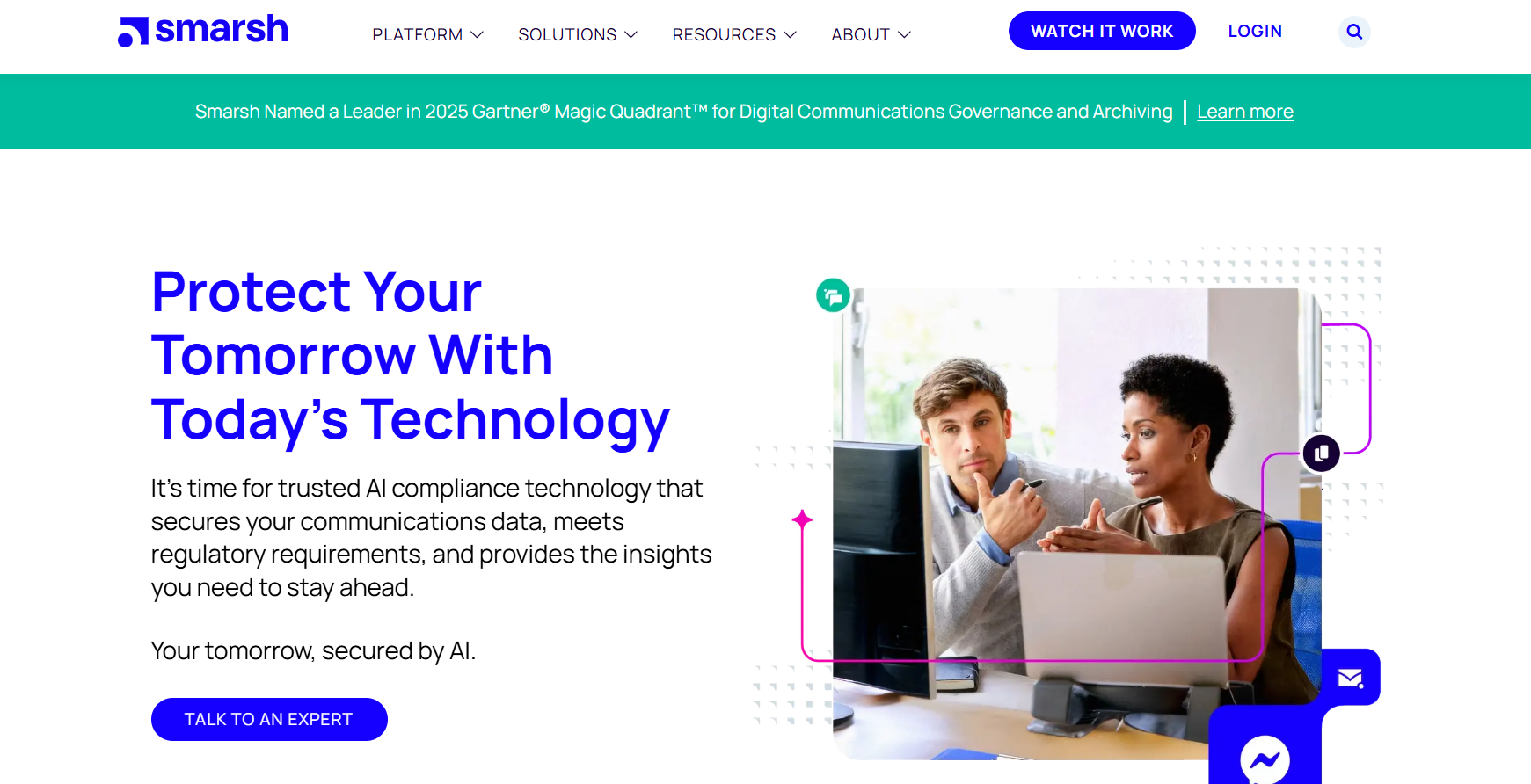
Smarsh specializes in communications compliance by capturing, archiving, and supervising digital interactions across channels. It is widely used to monitor emails, messages, and social media to meet record-keeping and surveillance requirements. Its capabilities are primarily limited to communication oversight rather than full compliance integration.
4. Comply
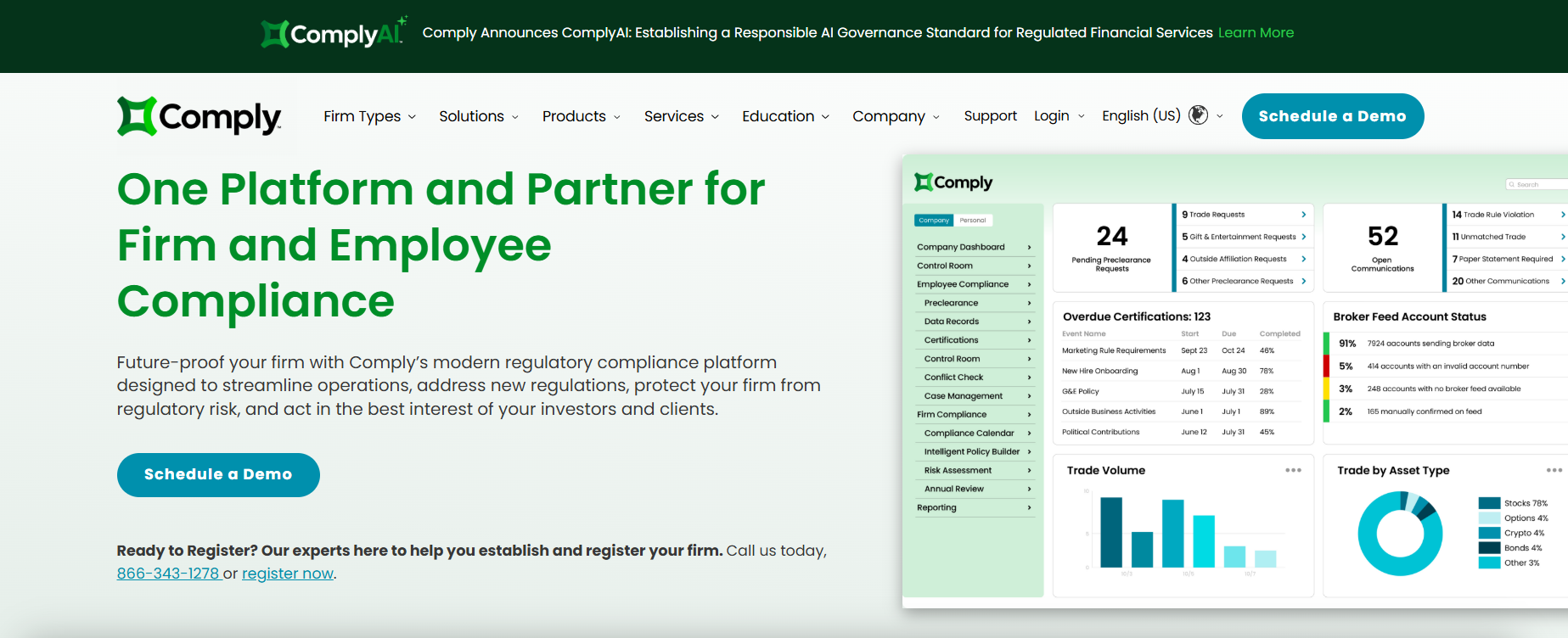
Comply provides structured compliance program management, including policy tracking, task workflows, and Reg BI documentation. It helps firms organize and maintain their compliance processes through dashboards and guided workflows. However, it operates more as a management layer and does not connect with real-time portfolio or advisory activity.
5. ACA Group
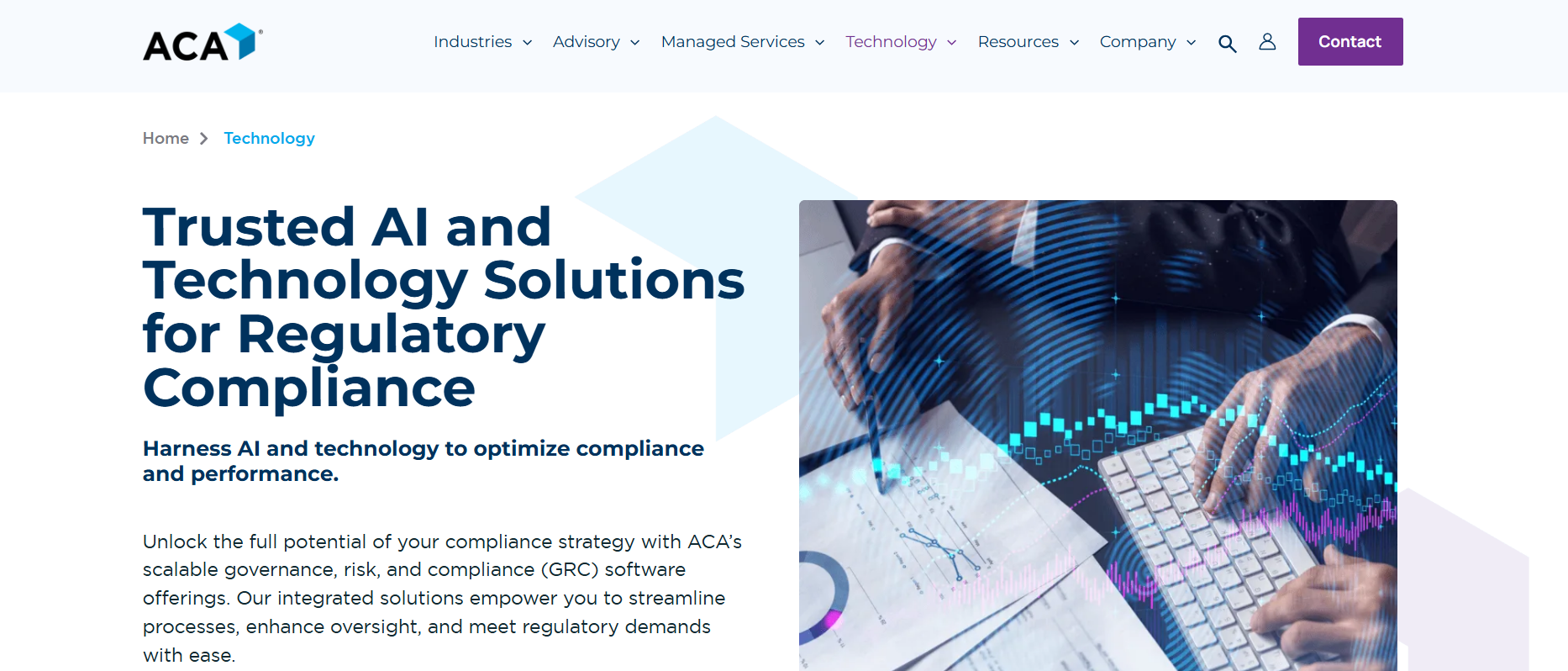
ACA Group provides institutional-grade compliance solutions along with advisory and consulting support. It is suited for firms that require structured compliance programs and external expertise to manage regulatory complexity. This compliance AI tool’s approach is comprehensive but often relies on a combination of tools and services rather than a single integrated intelligence layer.
The crux is that AI for regulatory compliance is redefining how advisory firms approach compliance. Firms that rely on disconnected tools and manual processes will continue to face inefficiencies and increasing regulatory pressure.
Compliance automation platforms that unify monitoring, documentation, and supervision into a single workflow enable firms to reduce operational risk and maintain continuous oversight.
Book a demo to see how StratiFi helps your firm move from reactive compliance to continuous, audit-ready oversight.
FAQs
What is AI for Regulatory Compliance in Financial Services?
AI for regulatory compliance uses machine learning and automation to monitor, detect, and document compliance activity continuously. It helps firms move from static policies to real-time, defensible oversight.
Why is AI Important for Compliance in the Financial Industry?
Regulatory expectations require continuous supervision across growing data and complexity. AI enables firms to monitor activity at scale. Moreover, it reduces manual effort and improves consistency in compliance decisions.
How does AI-driven Regulatory Compliance Work?
AI systems ingest data, monitor activity, and flag exceptions based on predefined and adaptive models. Besides, they create audit-ready documentation. This ensures every action is tracked and defensible.
What are the Best AI Tools for Regulatory Compliance for Financial Advisors?
The best AI tools for regulatory compliance for financial advisors include StratiFi, Hadrius, Smarsh, Comply, and ACA Group, each addressing specific compliance needs. StratiFi stands out by unifying monitoring, documentation, and advisory workflows into a single system, enabling continuous and defensible oversight.
What Features Should You Look for in an AI Compliance Software?
Firms should prioritize continuous monitoring, explainable alerts, and embedded documentation. Integration with advisory workflows and scalability are critical to ensure compliance keeps pace with firm growth.
How Do Financial Advisors Use AI for Daily Compliance Tasks?
Advisors use AI to monitor portfolios, identify risks, and document decisions automatically. This reduces administrative burden and ensures compliance is maintained alongside everyday advisory activities.